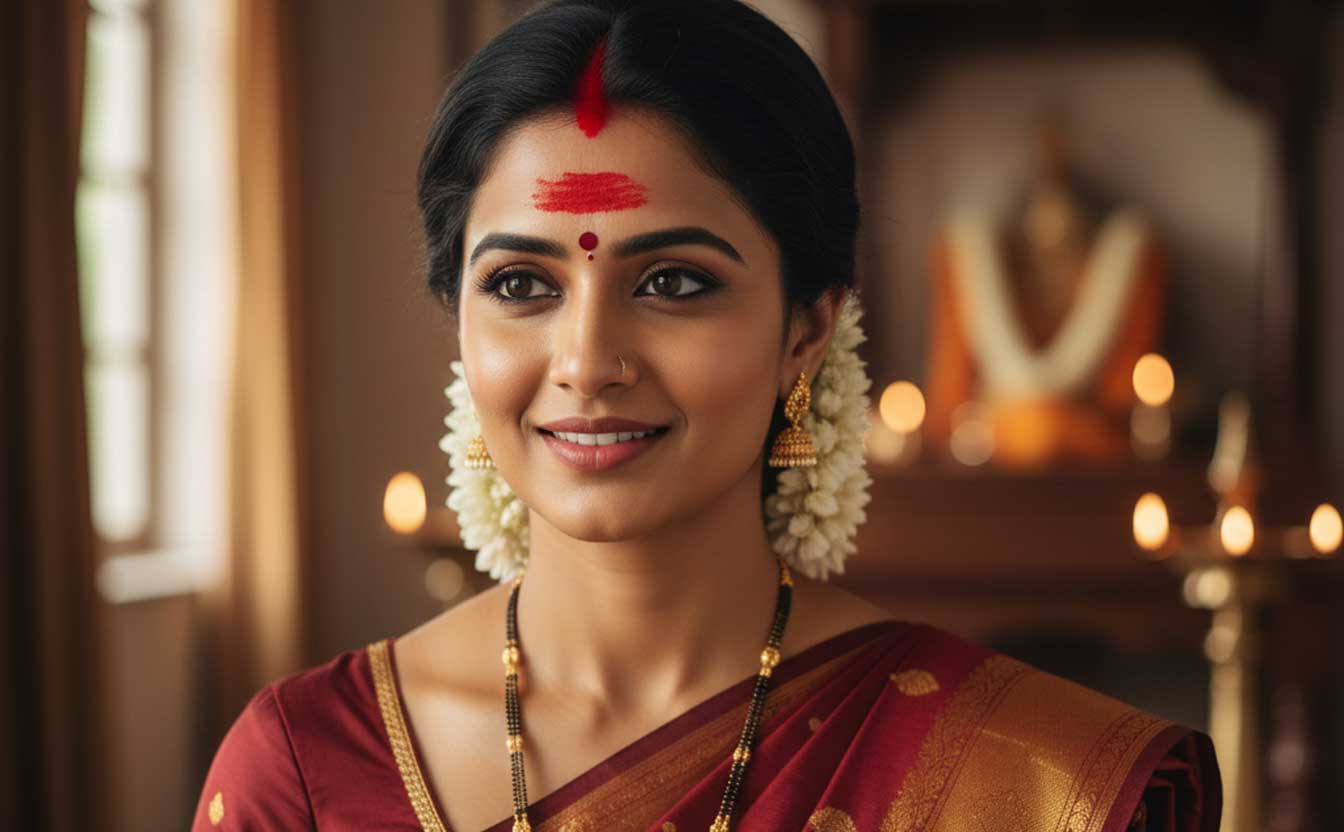
Why Do Married Hindu Women Apply Sindoor (Vermilion)?
In Hindu culture, the bright red streak of Sindoor (vermilion) in the parting of a woman’s hair is more than just a beauty mark. It is a powerful symbol of matrimony, a rite of passage, and a shield of protection. While it is widely known as a mark of being a “Suhaagin” (a married woman), the reasons for applying it go far beyond tradition, touching upon ancient science and spiritual well-being.
The Sacred Ritual of Vivaha (Marriage)
The application of Sindoor is a pivotal moment in a Hindu wedding ceremony, known as Sindoor-Dana. During this ritual, the groom applies a pinch of vermilion to the bride’s hair parting for the first time.
- Symbol of Commitment: This act signifies the bride’s transition into her new life.
- Prayer for Longevity: A wife continues to apply Sindoor daily as a prayer for her husband’s long life and prosperity.
- Cultural Identity: Traditionally, the absence of Sindoor in the hair parting indicates that a woman is either unmarried or a widow.
The Physiological Perspective: Science Behind the Tradition
Ancient Vedic scholars and practitioners of Ayurveda integrated health benefits into daily rituals. From the viewpoint of human anatomy, the placement of Sindoor is highly strategic:
1. Protection of the “Brahmarandhra”
The spot where Sindoor is applied is situated directly above the Brahmarandhra and the Adhipati Marma—vital energy points on the crown of the head. In women, this area is exceptionally sensitive and soft. Applying Sindoor serves as a protective layer for this delicate “marmasthal” (vital spot).
2. The Role of Mercury and Metals
Traditional Sindoor is prepared using turmeric, lime, and a specific amount of mercury (parad).
- Stress Management: Mercury is known for its ability to regulate blood pressure and cool the body. It helps in controlling “electrical excitation” or emotional stress, keeping the mind calm.
- Anti-Aging Properties: The presence of mercury in traditional vermilion is believed to help delay the appearance of wrinkles, keeping the face looking youthful and radiant.
Beauty and Auspiciousness
Beyond the health and ritualistic aspects, Sindoor is considered Mangal-dayak (auspicious). It is believed to bring good fortune to the household. Aesthetically, the vibrant red color contrasts with the hair, enhancing a woman’s natural grace and highlighting her “Roop-Saundarya” (physical beauty).
Summary Table: The Three Pillars of Sindoor
| Aspect | Significance |
| Spiritual | Represents the bond of marriage and the long life of the husband. |
| Medicinal | Balances the nervous system and protects vital energy points. |
| Social | Acts as a visible symbol of a woman’s marital status and honor. |
Conclusion: A Blend of Faith and Wisdom
The tradition of applying Sindoor is a beautiful intersection of a wife’s devotion and ancient Indian medical wisdom. It serves as a daily reminder of a sacred vow while simultaneously providing physical and psychological stability to the woman.