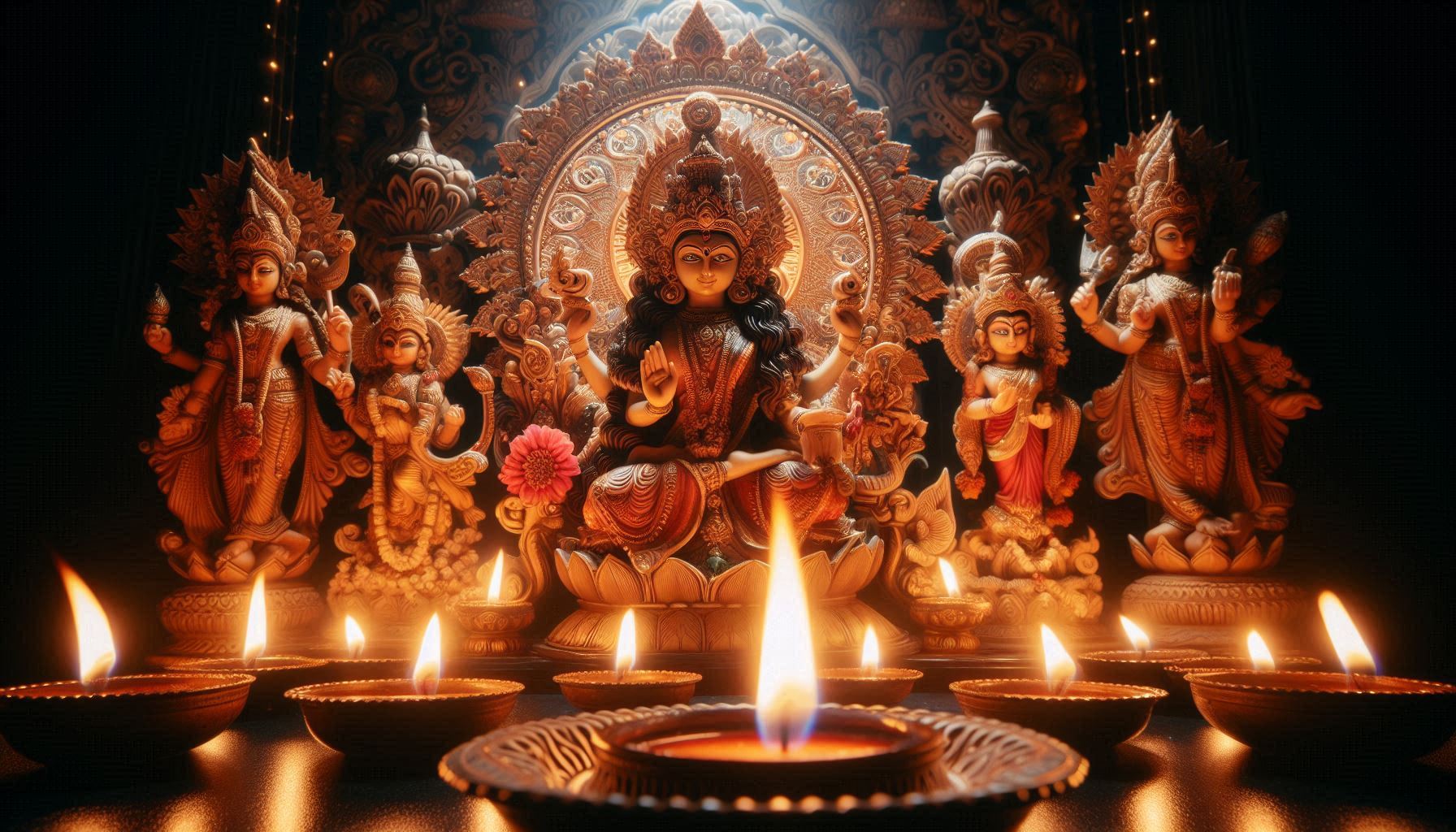
Why Lamps Are Lit in Hindu Rituals: Spiritual Significance
In creation, Surya Dev (the Sun God) is regarded as the source of life energy, and on Earth, fire is considered a transformed form of the Sun God. For this reason, to concentrate and invoke life-giving energy, Surya Dev is necessarily included in worship and ritual practices in the form of fire lit in a lamp (Diya, Deepak).
Among the five main elements of the human body—earth, water, air, fire, and space—fire holds a very important place. It is believed that any work performed in the presence of Agni Dev (the Fire God), taking him as a witness, surely attains success, and that Agni Dev resides in a burning lamp (Diya). Therefore, while worshipping the Divine and to make one’s devotion fruitful, lamps are lit during prayers and rituals.
Another belief related to lighting a lamp is that a lamp produces light, and light is another form of knowledge. God is present everywhere in the form of knowledge and illumination. To remove the darkness of ignorance and to attain the light of knowledge, lamps are lit during worship, prayers, and aarti.
Considering the Supreme Being as the embodiment of light, the Rigveda offers this prayer:
“Ayam kavirakavishu prachetā martyeshvāgniramṛito nidhāyi.
Sa mā no atra juhuraḥ sahasvaḥ sadā tve sumanasaḥ syāma.”
Meaning:
“O Supreme Father, the Supreme Soul in the form of light! You dwell as the wisest among the unwise and as immortality among mortals. May our lives not be filled with sorrow because of You, and may we always remain happy.”
The scriptures state that lighting lamps in even numbers causes the flow of energy to become inactive. Therefore, lamps should always be lit in odd numbers, so that positive energy continues to be generated. This is why, during religious ceremonies and rituals, lamps are lit only in odd numbers.
Lamps are also lit based on vows and rituals. For example, during Navratri, lamps are lit continuously for all nine days, and during an uninterrupted recitation of the Ramayana, a lamp is kept burning for twenty-four hours. Sometimes, a person takes a vow to light an eternal flame (Akhand Jyoti) until a specific task is completed. The lamp continues to burn until the purpose is fulfilled.
It is considered extremely inauspicious to extinguish such a vowed lamp before the vow is completed. Therefore, one should either avoid taking such a strict vow or, if taken, must ensure it is fully honored.
There is also a belief regarding the direction of the upright flame of a burning lamp. If the flame is kept facing east, it is believed to increase longevity; facing west, it brings distress; facing north, it promotes health and happiness; and facing south, it is believed to result in loss or harm.