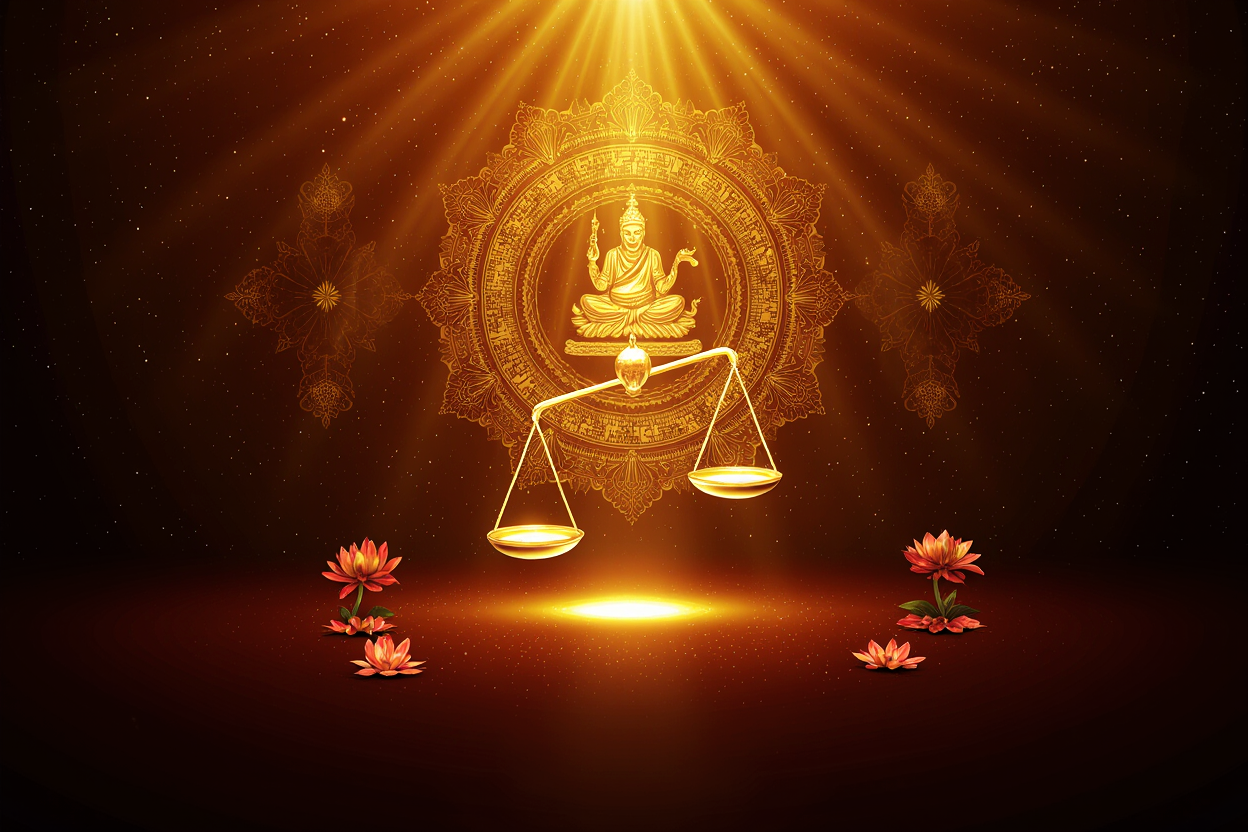
What is Dharma? Understanding Righteous Living in Hindu Spirituality
Dharma stands as one of the most profound and essential concepts in Hindu spirituality, yet it remains frequently misunderstood in modern discourse. This comprehensive guide explores what dharma truly means, its practical applications in daily life, and why understanding this principle is crucial for spiritual growth and righteous living. For more on related concepts, see our article on What is Karma? and Why Does Hinduism Have So Many Gods?
What is Dharma?
The Sanskrit term “dharma” derives from the root “dhar,” meaning “to sustain” or “to uphold.” Dharma represents the cosmic law that maintains order, harmony, and balance in the universe. Unlike Western concepts of religion, dharma encompasses duty, righteousness, moral law, and the inherent nature of all beings.
In Hindu philosophy, dharma is not merely a set of rules but the fundamental principle that sustains creation. The Bhagavad Gita (3.35) states: “Better is one’s own dharma, though imperfectly performed, than the dharma of another well performed. Better is death in one’s own dharma; the dharma of another is fraught with fear.”
Dharma as Universal Law
Dharma operates at multiple levels of existence. At the cosmic level, it maintains the order of the universe. At the social level, it governs ethical conduct and societal harmony. At the individual level, it guides personal duty and righteous action.
The Mahabharata declares: “Dharma protects those who protect dharma.” This reciprocal relationship emphasizes that upholding righteousness in our lives invites divine protection and spiritual progress.
Understanding Personal Dharma (Svadharma)
Svadharma refers to one’s personal duty based on their nature, position, and circumstances. Krishna’s teaching to Arjuna in the Bhagavad Gita centers on fulfilling svadharma without attachment to results. This concept acknowledges that each individual has unique responsibilities based on their role in life.
Your svadharma might include:
- Professional duties performed with integrity
- Family responsibilities fulfilled with love
- Social obligations met with sincerity
- Spiritual practices maintained with dedication
Common Misconceptions About Dharma
Several misunderstandings cloud the true meaning of dharma:
Misconception 1: Dharma is rigid religious dogma. In reality, dharma is flexible and context-sensitive, adapting to time, place, and circumstance while maintaining core principles.
Misconception 2: Dharma suppresses individual freedom. Actually, dharma liberates by providing a framework for meaningful action that leads to spiritual growth.
Misconception 3: Dharma applies only to Hindus. The principles of righteous living, duty, and moral order are universal and transcend religious boundaries.
Practical Application of Dharma in Daily Life
Living dharmically means aligning actions with righteousness in everyday situations:
In Work: Perform duties with excellence and integrity, avoiding dishonesty or exploitation.
In Relationships: Honor commitments, show compassion, and fulfill responsibilities toward family and community.
In Decision-Making: Choose actions that promote harmony and welfare rather than selfish gain.
In Spiritual Practice: Maintain regular sadhana (spiritual practice) that cultivates self-awareness and devotion.
Benefits of Living According to Dharma
Embracing dharma yields profound benefits:
- Inner Peace: Alignment with cosmic law reduces internal conflict and anxiety
- Karmic Harmony: Righteous action generates positive karma and spiritual merit
- Social Harmony: When individuals uphold dharma, society flourishes
- Spiritual Progress: Dharma purifies consciousness and accelerates evolution toward moksha (liberation)
- Divine Grace: Living dharmically invites divine support and protection
Common Mistakes in Understanding Dharma
Avoid these pitfalls when applying dharma:
Rigidity: Confusing dharma with inflexible rules prevents wise adaptation to circumstances.
Self-Righteousness: Using dharma to judge others contradicts its compassionate essence.
Passivity: Mistaking dharma for fatalism ignores the active duty it requires.
Compartmentalization: Limiting dharma to temple visits while ignoring ethical conduct in daily life misses its comprehensive nature.
Dharma and Modern Life
Ancient dharma principles remain remarkably relevant in contemporary society. Environmental stewardship reflects dharma toward nature. Social justice embodies dharma toward fellow beings. Professional ethics express dharma in the workplace. The timeless wisdom of dharma provides guidance for navigating modern complexities while maintaining spiritual integrity.
Conclusion
Dharma represents the eternal principle of righteousness that sustains individuals, society, and the cosmos. Understanding and living according to dharma transforms ordinary existence into spiritual practice. By fulfilling our svadharma with dedication and wisdom, we contribute to universal harmony and progress toward ultimate liberation.
The path of dharma requires discernment, courage, and commitment, but it remains the surest way to live meaningfully and achieve spiritual fulfillment.
Frequently Asked Questions
Q: What is the best definition of dharma?
A: Dharma is the cosmic law that upholds order, righteousness, and duty. It encompasses moral principles, natural law, and individual responsibility that sustain harmony in creation.
Q: Is dharma the same as religion?
A: No. Dharma transcends religion. While religion involves specific beliefs and practices, dharma refers to universal principles of righteousness, duty, and moral order applicable to all beings.
Q: Can dharma change over time?
A: The essence of dharma is eternal, but its application adapts to time, place, and circumstance (yuga-dharma). Core principles remain constant while specific duties may evolve.
Q: How do I know my svadharma?
A: Svadharma is discovered through self-reflection, understanding your nature, recognizing your roles and responsibilities, and seeking guidance from scriptures and wise teachers.
Q: What happens if I violate dharma?
A: Violating dharma creates negative karma, internal conflict, and disharmony. However, dharma also provides paths for redemption through repentance, correction, and renewed commitment to righteousness.