Are Hindus Idol Worshippers? The Truth About Murti Puja
The question “Are Hindus idol worshippers?” arises from a fundamental misunderstanding of Hindu worship practices. To outsiders observing Hindu rituals—with colorful statues, elaborate temple ceremonies, and home altars filled with deity images—it might appear that Hindus worship physical idols. The reality, however, is far more profound. Hindus engage in what is called murti puja—the worship of divine symbols—where the physical form serves as a focal point for connecting with the formless divine reality.
This article explores the philosophical foundations of Hindu worship, explains why murtis (sacred images) are used, and clarifies the distinction between worshipping the symbol versus worshipping what the symbol represents. By understanding this distinction, we can appreciate Hindu practices without reducing them to simplistic “idol worship.”
What is Murti Puja? Understanding Hindu Worship Practices
Murti puja is the ritual worship of sacred images in Hinduism. The word “murti” itself means “embodiment” or “manifestation”—not “idol” in the pejorative sense. In Hindu philosophy, the divine (Brahman) is formless, infinite, and beyond human comprehension. Since the human mind struggles to concentrate on the formless absolute, Hinduism provides concrete forms (murtis) as aids to spiritual practice.
These murtis represent various aspects of the divine—like different facets of a single diamond. For example:
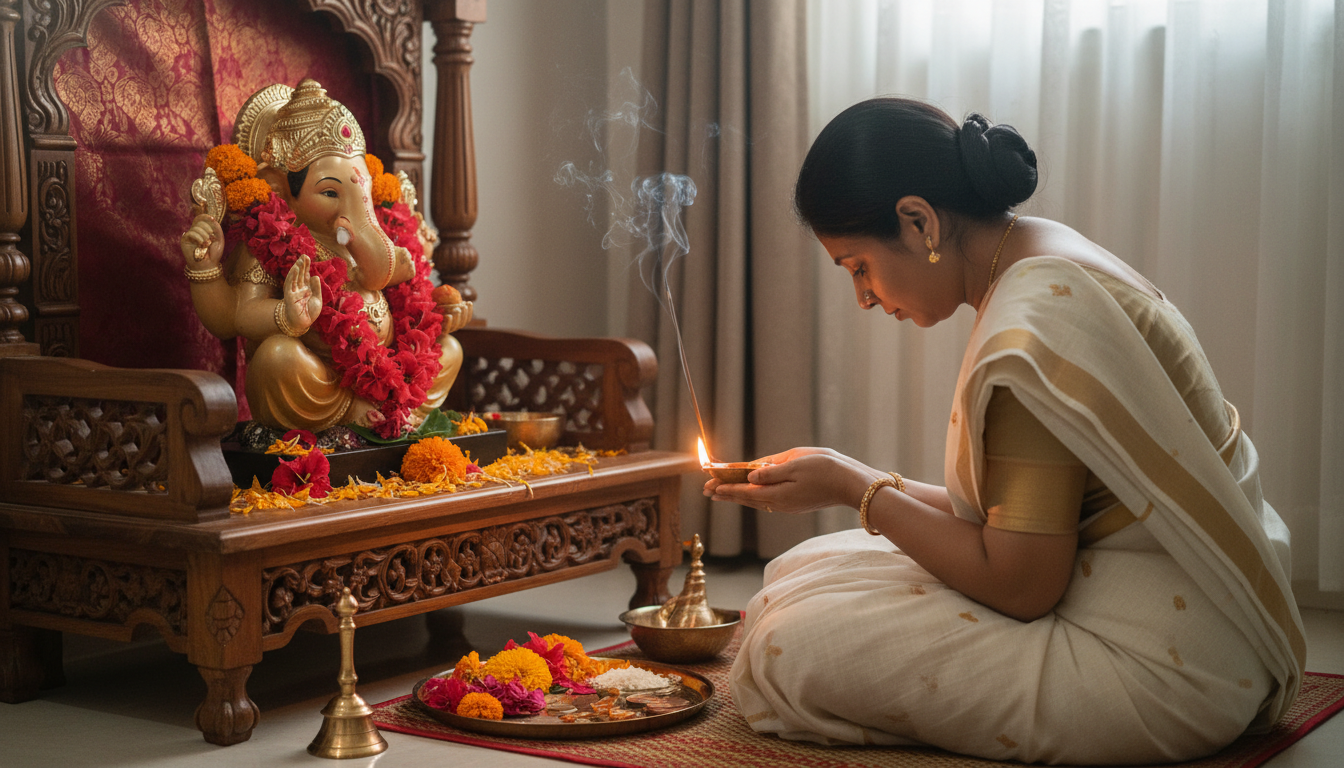
- Ganesha represents wisdom and the removal of obstacles
- Lakshmi symbolizes abundance and prosperity
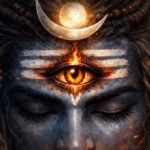
- Shiva embodies transformation and consciousness
- Vishnu represents preservation and cosmic order
During puja (worship), Hindus don’t believe the statue is God; rather, they believe God’s presence can be invoked into the statue temporarily for the purpose of worship. This process is called prana pratishtha—establishing the life force—and is performed by qualified priests during temple consecration ceremonies.
Symbolism vs. Literal Worship: The Hindu Perspective
The key distinction lies in understanding symbolism versus literal worship. For Hindus, the murti is like:
- A flag representing a nation (you salute the flag as a symbol of the country, not worship the cloth)
- A photograph of a loved one (you cherish what it represents, not the paper and ink)
- A road sign pointing toward a destination (you follow the direction, not worship the signpost)
Hindu scriptures explicitly state that God is beyond form. The Bhagavad Gita (12:5) says: “For those whose minds are set on the unmanifested, impersonal aspect of the Supreme, the path is arduous and painful.” The text acknowledges that worshipping a personal form (saguna Brahman) is easier for most people than meditating on the formless absolute (nirguna Brahman).
The great Hindu philosopher Adi Shankara (8th century CE), who championed non-dualism (Advaita Vedanta), himself established temples and performed deity worship. He understood that different spiritual approaches suit different temperaments. Some may reach the divine through abstract meditation; others benefit from concrete symbols.
Scriptural Foundations: What Hindu Texts Say About Idols
Hindu texts provide clear guidance on the purpose of murtis:
- Yajur Veda states: “The Supreme Reality is formless. For the sake of devotees, the formless assumes forms.” This establishes the principle that divine forms are concessions to human limitations.
- Bhagavata Purana explains: “Just as one can taste honey by licking the honey pot, similarly, by worshipping the deity form, one can experience the divine essence.”
- Agamas (ritual texts) detail the precise methods of murti creation, consecration, and worship—always emphasizing that the murti is a means, not an end.
- The Isha Upanishad beautifully captures the balanced view: “The face of truth is covered by a golden vessel. Remove the covering, O Lord of Light, so that I who love the truth may see it.”
The consistent teaching is clear: the form points beyond itself to the formless reality. As the river leads to the ocean but isn’t the ocean itself, the murti leads to God but isn’t God in totality.
The Psychological and Spiritual Benefits of Concrete Symbols
Why use symbols at all if God is formless? Hindu philosophy recognizes human psychology:
- Focus for Concentration: The human mind wanders. A concrete form provides an anchor for meditation and prayer.
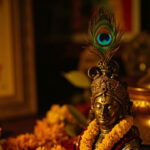
- Emotional Connection: Personal relationships with divine forms (like Krishna, Durga, or Ganesha) foster love (bhakti), which is considered a powerful spiritual path.
- Teaching Tool: Each deity’s form teaches spiritual lessons through symbolism:
- Multiple arms represent divine omnipotence
- Specific hand gestures (mudras) convey particular meanings
- Vehicle animals (vahanas) symbolize qualities to cultivate or overcome
- Colors, garments, and ornaments all carry symbolic significance
- Community Building: Shared symbols create shared spiritual experiences, fostering community bonds.
- Sensory Engagement: Hindu worship engages all five senses—sight (beautiful murtis), sound (mantras), smell (incense), taste (prasad/food offering), and touch (applying vermilion)—creating a holistic spiritual experience.
Modern neuroscience supports this approach: concrete representations activate different brain regions than abstract concepts, making spiritual experience more accessible and memorable.
Common Misconceptions About Hindu “Idol Worship”
Several misunderstandings persist about Hindu practices:
Misconception 1: Hindus believe the statue itself is God.
Truth: Hindus understand the murti as a symbolic representation. After worship, the same statue may be treated as ordinary material until reconsecrated.
Misconception 2: Idol worship is primitive or superstitious.
Truth: Using symbols is a sophisticated psychological technique found in many traditions. Catholics use statues and icons, Buddhists use Buddha images, and even nationalists use flags—all as focal points for devotion to something greater.
Misconception 3: All Hindus worship idols.
Truth: Hinduism encompasses diverse practices. Some Hindus (particularly followers of certain Vedanta schools) meditate on the formless absolute without any images. Others use images as aids. Both approaches are valid within the tradition.
Misconception 4: The Bible condemns Hindu practices.
Truth: Biblical prohibitions against “graven images” (Exodus 20:4-5) were specific to ancient Israel’s context—preventing worship of other gods. Hinduism’s use of symbols to worship the one divine reality is philosophically different.
Misconception 5: Idol worship slows spiritual progress.
Truth: For beginners, concrete symbols often accelerate spiritual development by making abstract concepts tangible. Advanced practitioners may transcend symbols, but dismissing them as “slow” misunderstands their pedagogical purpose.
How to Respectfully Understand Hindu Worship Practices
If you’re not Hindu but want to understand Hindu worship:
- Use Accurate Terminology: Say “murti puja” or “deity worship” rather than “idol worship,” which carries negative connotations.
- Recognize the Symbolism: Understand that the physical form represents spiritual qualities or divine aspects.
- Respect the Intention: The worshipper’s sincere devotion matters more than the external form.
- Ask Questions Respectfully: If curious about Hindu practices, ask with genuine interest rather than judgment.
- Attend a Temple Service: Observing a properly conducted puja can provide better understanding than theoretical explanations.
- Read Hindu Perspectives: Scriptures like the Bhagavad Gita or works by modern Hindu teachers explain the philosophy behind the practices.
- Avoid Comparative Judgment: Different traditions use different methods. What seems strange in one tradition may have deep meaning in another.
Conclusion: Beyond the Idol to the Divine Reality
So, are Hindus idol worshippers? The answer requires nuance. Yes, Hindus use physical representations (murtis) in worship. No, they don’t worship the physical objects themselves. They worship the divine reality that the murtis symbolize—much as a person kissing a loved one’s photograph kisses what it represents, not the paper.
Hinduism’s genius lies in its recognition of human diversity. It offers multiple paths to the divine: through knowledge (jnana yoga), devotion (bhakti yoga), selfless action (karma yoga), and meditation (raja yoga). Murti puja falls primarily under bhakti yoga—the path of loving devotion.
For the sincere practitioner, the murti becomes transparent—a window through which the formless divine becomes visible to the human heart. As the Upanishads say: “From the unreal lead me to the real, from darkness lead me to light, from death lead me to immortality.”
The murti serves as that bridge from the unreal (the temporary physical form) to the real (the eternal divine), from spiritual darkness to enlightenment, from the mortal to the immortal. When understood in this light, Hindu worship reveals itself not as primitive idolatry but as sophisticated spiritual technology—carefully designed to transform human consciousness toward the divine.
FAQ
Do Hindus actually believe the statues are gods?
No. Hindus understand that murtis (sacred images) are symbolic representations of the divine. Through rituals, divine presence is invoked into the murti temporarily for worship, but the physical material itself isn’t considered divine. After worship, the same statue may be treated as ordinary material until reconsecrated.
Why do Hindus need statues if God is everywhere?
Hindu philosophy recognizes that while God is indeed omnipresent, the human mind needs focal points for concentration. Just as a magnifying glass focuses sunlight to create fire, a murti focuses the wandering mind to connect with the divine. Different spiritual practices suit different psychological temperaments.
Is idol worship against Hindu teachings?
Quite the opposite. Hindu scriptures explicitly sanction the use of forms for worship while clarifying that the ultimate reality is formless. The Bhagavad Gita (12:5) acknowledges that worshipping a personal form is easier for most people than meditating on the formless absolute. It’s about choosing the appropriate spiritual tool for one’s current capacity.
How do Hindus respond to criticism of idol worship?
Most Hindus understand the criticism stems from misunderstanding. They might explain the symbolic nature of their practices or share scriptural teachings about the formless absolute. Some may point out that all traditions use symbols (crosses, flags, photographs), differing only in which symbols they find meaningful.
Can someone be Hindu without worshipping idols?
Absolutely. Hinduism encompasses diverse practices. Followers of certain Vedanta schools, practitioners of meditation traditions, and those who prefer formless worship (nirguna upasana) may never use murtis. Hinduism’s pluralism allows for both symbolic and non-symbolic approaches to the divine.
What’s the difference between Hindu murti worship and Catholic icon veneration?
Both traditions understand their sacred images as pointing beyond themselves to divine realities. The main difference is theological: Catholics venerate saints and Mary as intercessors, while Hindus see murtis as manifestations of the divine itself. Both, however, reject the accusation of worshipping the physical material.
Do all Hindu deities represent the same God?
Yes, in mainstream Hindu theology, all deities are manifestations of the one supreme reality (Brahman). Different forms represent different aspects—like different doors to the same house or different colors of the same light. This is expressed in the Vedic saying: “Truth is one; the wise call it by many names.”
Related Articles
Continue exploring our Hinduism FAQ series: