What is the Meaning of Sanatana Dharma?
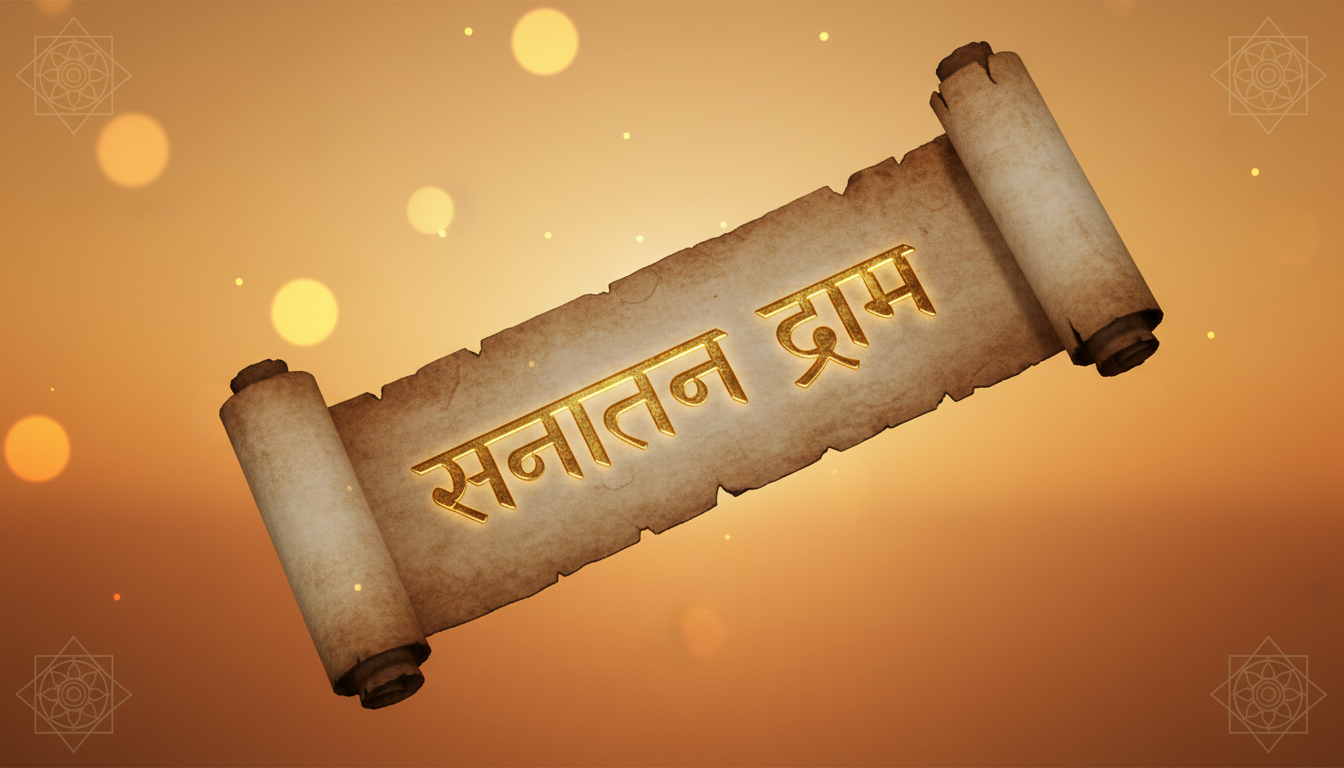
Sanatana Dharma (सनातन धर्म) is the original and eternal path of righteousness that has guided spiritual seekers for thousands of years. Often referred to as Hinduism, Sanatana Dharma transcends the boundaries of a conventional religion, representing instead a way of life, a cosmic order, and an eternal truth that exists independent of human interpretation.
The term itself reveals profound wisdom: “Sanatana” means eternal, everlasting, or without beginning or end, while “Dharma” signifies duty, righteousness, cosmic law, and the inherent nature of existence. Together, Sanatana Dharma represents the eternal principles that govern the universe and guide humanity toward spiritual evolution and ultimate liberation.
Understanding the Eternal Nature of Sanatana
Unlike religions founded by specific prophets at particular points in history, Sanatana Dharma has no single founder, no specific starting date, and no central authority. It is called “eternal” because its principles are believed to be as old as creation itself—discovered by ancient sages through deep meditation and spiritual insight rather than created or revealed.
The Vedic sages, through their profound tapas (austerity) and dhyana (meditation), perceived the eternal truths that govern existence. These insights were compiled into the Vedas, Upanishads, and other sacred texts, but the truths themselves are considered apaurusheya—not of human origin, but eternal realities waiting to be discovered by each generation.
The Multifaceted Meaning of Dharma
Dharma is one of those profound Sanskrit words that defies simple translation. It encompasses multiple dimensions of meaning:
1. Cosmic Order (Rita)
Dharma represents the natural law that maintains cosmic harmony—the force that keeps planets in orbit, seasons in cycle, and life in balance. It is the underlying order that prevents chaos and sustains creation.
2. Righteous Duty (Svadharma)
On a personal level, dharma refers to one’s righteous duty based on their nature, position, and stage in life. It is doing what is right, not what is easy or personally beneficial.
3. Inherent Nature
Everything has its own dharma—fire’s dharma is to burn, water’s dharma is to flow, and the soul’s dharma is to seek truth and liberation.
4. Spiritual Path
Dharma also refers to the path of righteousness that leads to moksha (liberation) and union with the Divine.
Core Principles of Sanatana Dharma
While Sanatana Dharma is incredibly diverse and accommodates various paths, several core principles unite all its traditions:
1. Brahman – The Ultimate Reality
The belief in one supreme, formless, infinite reality called Brahman that pervades all existence. All deities are different aspects of this one ultimate truth.
2. Atman – The Eternal Soul
Every being possesses an eternal soul (atman) that is never born and never dies, merely transitioning through different bodies until achieving liberation.
3. Karma – The Law of Cause and Effect
Every action has consequences. Our thoughts, words, and deeds create karma that shapes our present and future experiences.
4. Samsara – The Cycle of Rebirth
Souls undergo repeated birth and death until they achieve moksha, liberation from this cycle through spiritual realization.
5. Moksha – Liberation
The ultimate goal of human life—freedom from the cycle of rebirth and union with the Divine.
6. The Four Purusharthas – Goals of Life
Sanatana Dharma recognizes four legitimate goals of human existence:
- Dharma: Righteous living and moral duty
- Artha: Material prosperity and security
- Kama: Legitimate desires and enjoyment
- Moksha: Spiritual liberation
Why “Eternal”? The Timeless Wisdom
Sanatana Dharma is called eternal for several profound reasons:
Universal Principles: Its teachings about truth, compassion, non-violence, and self-realization are universal truths that apply to all humans regardless of time, place, or culture.
Adaptable Yet Unchanging: While external practices may evolve, the core principles remain constant. This flexibility has allowed Sanatana Dharma to survive and thrive for millennia while maintaining its essential wisdom.
Experiential Truth: The truths of Sanatana Dharma are not based on blind faith but can be verified through personal spiritual practice and experience. Each generation can rediscover these truths through yoga, meditation, and self-inquiry.
No Final Prophet: Unlike religions that await a final judgment or last prophet, Sanatana Dharma recognizes that truth is eternal and can be realized by anyone at any time through sincere spiritual effort.
The Four Yogas – Paths to Realization
Sanatana Dharma offers multiple paths (yogas) to suit different temperaments:
Jnana Yoga – Path of Knowledge
For the intellectually inclined, this path uses study, contemplation, and self-inquiry to realize the truth.
Bhakti Yoga – Path of Devotion
For the emotionally inclined, this path uses love, devotion, and surrender to the Divine.
Karma Yoga – Path of Selfless Action
For the actively inclined, this path transforms daily work into spiritual practice through selfless service.
Raja Yoga – Path of Meditation
For the mystically inclined, this path uses meditation and mind control to achieve direct experience of the Divine.
Common Misconceptions
Is Sanatana Dharma the Same as Hinduism?
While often used interchangeably, “Hinduism” is a relatively recent term coined by outsiders. Sanatana Dharma is the traditional self-designation, emphasizing its eternal nature rather than geographical or cultural identity.
Does It Have Only One God?
Sanatana Dharma accommodates various theological perspectives—monotheism, polytheism, panentheism, and even non-theism. All are seen as valid approaches to understanding the one infinite reality.
Is It Just Rituals and Ceremonies?
While rituals exist, they are secondary to the core pursuit of self-realization. The Upanishads emphasize that knowledge and direct experience supersede ritual performance.
Relevance in Modern Times
Sanatana Dharma’s ancient wisdom offers profound solutions to modern challenges:
Environmental Crisis: The principle of seeing the Divine in all creation fosters environmental respect and sustainability.
Mental Health: Meditation, yoga, and mindfulness practices—rooted in Sanatana Dharma—are now globally recognized for mental wellness.
Ethical Living: Concepts like ahimsa (non-violence), satya (truthfulness), and dharma (righteous duty) provide ethical frameworks for personal and professional life.
Scientific Compatibility: Unlike dogmatic systems, Sanatana Dharma encourages questioning and investigation, making it compatible with scientific inquiry.
Frequently Asked Questions
Q: What is the main goal of Sanatana Dharma?
A: The ultimate goal is moksha—liberation from the cycle of birth and death through self-realization and union with the Divine. However, it also supports legitimate worldly goals (dharma, artha, kama) as stepping stones.
Q: Do I need to be born Hindu to follow Sanatana Dharma?
A: No. Sanatana Dharma is based on universal principles that anyone can practice regardless of birth. It welcomes all sincere seekers.
Q: What are the sacred texts of Sanatana Dharma?
A: The primary scriptures include the Vedas, Upanishads, Bhagavad Gita, Ramayana, Mahabharata, Puranas, and various Agamas and Tantras. The Bhagavad Gita is often considered the most accessible summary of its teachings.
Q: Is Sanatana Dharma a religion?
A: It’s more accurate to call it a spiritual tradition or way of life. It doesn’t require exclusive belief, has no central authority, and accommodates diverse practices and beliefs.
Q: What is the concept of God in Sanatana Dharma?
A: Sanatana Dharma recognizes one ultimate reality (Brahman) that can be worshipped in various forms—Shiva, Vishnu, Devi, Ganesha, etc. All forms are seen as different aspects of the one truth.
Q: How does Sanatana Dharma view other religions?
A: It embraces the principle of “Ekam Sat Vipra Bahudha Vadanti” (Truth is One, the wise call it by many names). All genuine spiritual paths are respected as valid approaches to the Divine.
Q: What practices should a beginner start with?
A: Beginners can start with: daily meditation (even 10 minutes), studying the Bhagavad Gita, practicing ahimsa (non-violence), performing one’s duty with dedication, and cultivating gratitude and compassion.
Conclusion: The Eternal Path Forward
Sanatana Dharma is not merely a historical tradition but a living, breathing path of spiritual evolution. Its eternal nature lies not in rigid dogma but in universal principles that transcend time and culture. Whether through devotion, knowledge, selfless service, or meditation, it offers each seeker a path suited to their nature.
In a world often divided by religious differences, Sanatana Dharma’s message of unity in diversity, respect for all paths, and the pursuit of direct spiritual experience offers timeless wisdom for humanity’s continued evolution.
The question “What is the meaning of Sanatana Dharma?” ultimately points beyond words to direct experience. As the ancient sages discovered and each generation rediscovers, Sanatana Dharma is the eternal truth that lives in the heart of every seeker, waiting to be realized.
Related Articles
Continue exploring our Hinduism FAQ series: