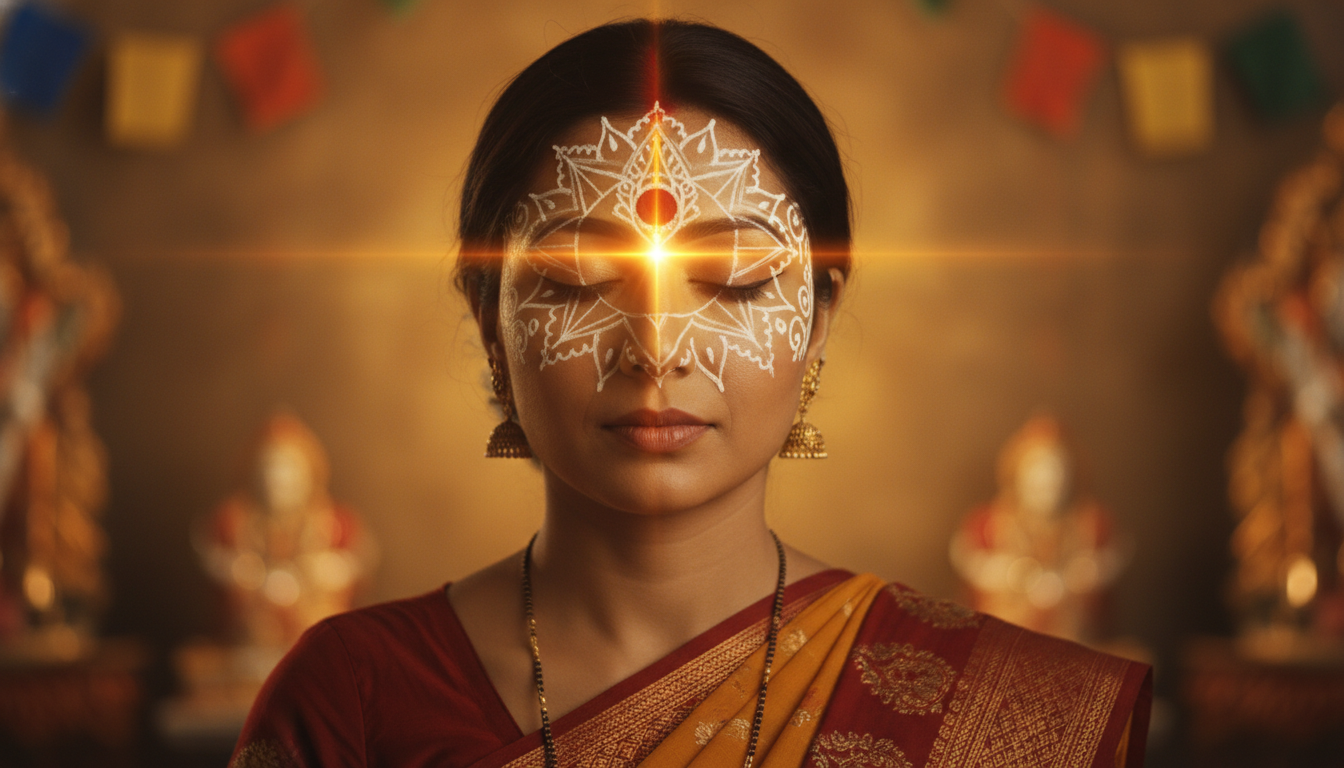
What is the Significance of Bindi and Tilak on the Forehead? Hindu Symbolism Explained
In this comprehensive guide, we’ll explore the true meaning behind these sacred forehead marks, their spiritual science, different types, and why Hindus continue to wear them today.
What is a Bindi?
The word “bindi” comes from the Sanskrit word “bindu” meaning “drop” or “point.” It is a colored dot worn on the center of the forehead, traditionally by women. The bindi is positioned directly over the ajna chakra (third eye), which is considered the seat of wisdom and spiritual insight.
Traditional Significance of Bindi
- Third Eye Activation: The bindi is placed over the ajna chakra, believed to enhance intuition and spiritual perception
- Marital Status: Traditionally, a red bindi indicated a married woman, symbolizing prosperity and the well-being of her husband
- Energy Protection: The bindi is believed to retain vital energy and prevent the loss of prana (life force) through the third eye
- Auspiciousness: Wearing a bindi is considered mangalik (auspicious) and invites positive energy
What is a Tilak?
A tilak (also called tilaka or pottu in South India) is a sacred mark worn on the forehead by both men and women, typically during religious ceremonies, temple visits, or spiritual practices. Unlike the bindi, which is often decorative, the tilak is primarily ritualistic and devotional.
Spiritual Meaning of Tilak
- Divine Blessing: A tilak is often applied by a priest or guru as a blessing, signifying divine grace
- Sectarian Identity: Different Hindu traditions wear distinct tilak styles that identify their spiritual lineage
- Mental Focus: The tilak serves as a reminder to keep the mind focused on spiritual goals
- Cooling Effect: Traditional tilak materials (sandalwood, kumkum) have cooling properties that calm the mind
The Science Behind the Forehead Mark
Ancient Hindu sages understood what modern science is now confirming – the forehead is an energetically sensitive area. Here’s the spiritual science behind bindi and tilak:
1. The Ajna Chakra (Third Eye)
The point between the eyebrows is where the ida and pingala nadis (energy channels) meet and merge into the sushumna (central channel). This is the location of the ajna chakra, associated with:
- Intuition and inner wisdom
- Clarity of thought
- Spiritual awakening
- Decision-making abilities
Placing a bindi or tilak here is believed to activate and protect this energy center.
2. Energy Retention
According to yogic science, the body can lose subtle energy through certain points, including the third eye. The bindi acts as a seal, preventing this energy loss and helping maintain vital prana.
3. Cooling Properties
Traditional tilak materials like sandalwood paste (chandan), kumkum (turmeric and lime), and vibhuti (sacred ash) have natural cooling properties. The forehead can accumulate heat from mental activity, and these substances help cool the area, promoting calmness and mental clarity.
Different Types of Tilak and Their Meanings
Hindu traditions have distinct tilak styles that reflect their devotional focus:
1. Vaishnava Tilak (U-shaped)
Who wears it: Devotees of Lord Vishnu (including ISKCON followers)
Design: Two vertical lines joined at the bottom, forming a U or V shape
Meaning: Represents the foot of Lord Vishnu. The lines are typically made from gopi chandan (sacred clay from Dwarka).
2. Shaiva Tilak (Three Horizontal Lines)
Who wears it: Devotees of Lord Shiva
Design: Three horizontal lines called tripundra
Meaning: Represents the three aspects of Shiva – creator, preserver, destroyer. Made from vibhuti (sacred ash), symbolizing detachment from worldly desires.
3. Shakta Tilak (Red Dot)
Who wears it: Devotees of the Divine Mother (Shakti, Kali, Durga)
Design: A single red dot, often larger than a traditional bindi
Meaning: Represents the divine feminine energy and the blessing of the Mother Goddess.
4. Smarta Tilak (Multiple Lines)
Who wears it: Followers of Adi Shankaracharya’s Smarta tradition
Design: Multiple horizontal lines with a central mark
Meaning: Represents worship of five deities (Shiva, Vishnu, Shakti, Surya, Ganesha) as equal manifestations of Brahman.
Bindi vs. Tilak: What’s the Difference?
| Aspect | Bindi | Tilak |
|---|---|---|
| Primary Wearers | Women (traditionally) | Both men and women |
| Purpose | Decorative + Spiritual | Ritualistic + Devotional |
| When Worn | Daily wear | During prayers, ceremonies, temple visits |
| Material | Kumkum, stickers, decorative | Sandalwood, kumkum, vibhuti, gopi chandan |
| Marital Symbol | Yes (red bindi = married) | No |
When and Why Do Hindus Wear Bindi and Tilak?
Daily Wear
Many Hindu women wear a bindi daily as part of their solah shringar (16 adornments). It’s considered auspicious and enhances beauty while providing spiritual protection.
Religious Ceremonies
During pujas, yagnas, weddings, and other sacred ceremonies, both men and women receive tilak as a blessing from the priest. This marks the person as blessed and protected during the ritual.
Temple Visits
After darshan (viewing the deity), priests apply tilak to devotees as a symbol of the deity’s grace. This is considered highly auspicious.
Festivals and Auspicious Occasions
During festivals like Diwali, Navratri, Durga Puja, and weddings, elaborate bindis and tilaks are worn to mark the celebratory and sacred nature of the occasion.
Materials Used for Bindi and Tilak
Traditional bindi and tilak are made from natural, spiritually significant materials:
Kumkum (Vermilion)
Made from turmeric and lime, kumkum is bright red and considered highly auspicious. It’s used for both bindi and tilak, especially during festivals and ceremonies.
Sandalwood Paste (Chandan)
Sandalwood has natural cooling properties and a divine fragrance. It’s used for tilak during prayers and is believed to please the deities.
Sacred Ash (Vibhuti)
Used primarily by Shaivites, vibhuti is ash from sacred fire rituals (havan). It symbolizes detachment and the transient nature of life.
Gopi Chandan
Sacred clay from Dwarka (associated with Lord Krishna), used by Vaishnavas for their U-shaped tilak.
Saffron (Kesar)
Pure saffron paste is used for special occasions and is considered extremely pure and auspicious.
Modern Evolution of the Bindi
While traditional bindis were made from kumkum, modern bindis come in various forms:
- Sticker bindis: Convenient, available in countless designs and colors
- Decorative bindis: Embellished with stones, glitter, and intricate patterns
- Fashion bindis: Worn as accessories, sometimes without religious significance
However, for religious and auspicious occasions, traditional kumkum bindis are still preferred for their spiritual potency.
Common Misconceptions
Myth 1: “Bindi is Just Fashion”
Truth: While modern fashion has adopted the bindi, its roots are deeply spiritual. Traditional bindis worn over the third eye have specific energetic purposes.
Myth 2: “Only Married Women Wear Bindi”
Truth: While a red bindi traditionally indicated marriage, unmarried women and girls also wear bindis (often black or other colors) for spiritual and aesthetic reasons.
Myth 3: “Tilak is Just a Religious Mark”
Truth: Tilak has scientific benefits too – the cooling effect on the forehead, activation of the ajna chakra, and mental focus enhancement are recognized in yogic science.
How to Apply Bindi and Tilak Correctly
Applying a Bindi
- Cleanse the forehead
- Locate the center point between the eyebrows (ajna chakra)
- Apply kumkum or place sticker bindi gently
- Chant a silent prayer or mantra for auspiciousness
Applying a Tilak
- Wash hands and face
- Use the ring finger (considered pure) to apply
- Apply between the eyebrows, slightly upward toward the hairline
- Receive from a priest or guru when possible (for blessings)
- Chant the deity’s name or a protective mantra
The Deeper Spiritual Message
Beyond the physical mark, the bindi and tilak serve as constant reminders:
- To keep the third eye open: Seek wisdom beyond surface appearances
- To stay spiritually aware: Remember the divine throughout daily activities
- To protect energy: Guard your mental and spiritual space
- To honor tradition: Connect with thousands of years of spiritual practice
Conclusion: More Than Just a Mark
The bindi and tilak are beautiful examples of how Hinduism integrates spirituality into everyday life. What appears as a simple dot or mark is actually a sophisticated spiritual technology – activating energy centers, providing protection, enhancing mental clarity, and connecting the wearer to divine consciousness.
Whether worn daily as a bindi or applied during worship as a tilak, these sacred marks continue to serve as visible symbols of Hindu dharma, reminding both the wearer and observers of the deeper spiritual reality that exists beyond the physical world.
Next time you see someone with a bindi or tilak, you’ll understand – it’s not just decoration. It’s a doorway to higher consciousness, worn right on the forehead.
FAQ: Bindi and Tilak on the Forehead
1. What is the main purpose of wearing a bindi?
The bindi is worn over the ajna chakra (third eye) to activate spiritual insight, retain vital energy, and provide protection. Traditionally, it also indicates marital status for women.
2. Can unmarried women wear a bindi?
Yes! While a red bindi traditionally indicated marriage, unmarried women and girls commonly wear bindis in various colors for spiritual and aesthetic purposes.
3. What is the difference between bindi and tilak?
A bindi is typically worn by women as a daily mark (decorative + spiritual), while a tilak is worn by both men and women during religious ceremonies and temple visits (primarily ritualistic).
4. Why is the bindi placed between the eyebrows?
This location is the ajna chakra (third eye), where major energy channels meet. Placing a bindi here activates intuition, enhances mental clarity, and prevents energy loss.
5. What materials are used for traditional tilak?
Common materials include sandalwood paste (chandan), kumkum (turmeric and lime), sacred ash (vibhuti), gopi chandan (sacred clay), and saffron.
6. Do men wear bindi?
Traditionally, men wear tilak rather than bindi. However, the spiritual principle is the same – marking the third eye for spiritual activation and protection.
7. What does the U-shaped tilak mean?
The U-shaped tilak (Vaishnava tilak) represents the foot of Lord Vishnu and is worn by his devotees, including ISKCON followers.
8. Is wearing bindi mandatory for Hindu women?
No, it’s not mandatory. However, it’s considered auspicious and is widely practiced as part of cultural and spiritual tradition.
9. Can I wear a bindi if I’m not Hindu?
Yes, but it’s important to understand and respect its cultural and spiritual significance. Avoid wearing it purely as a fashion accessory without acknowledging its meaning.
10. What does the three-line tilak (tripundra) represent?
The tripundra (three horizontal lines) is worn by Shaivites and represents the three aspects of Shiva: creator, preserver, and destroyer. It’s made from sacred ash (vibhuti).
This article is part of our Hinduism FAQ Series, demystifying Hindu beliefs, practices, and symbolism for modern seekers.
Related Articles
Continue exploring our Hinduism FAQ series: