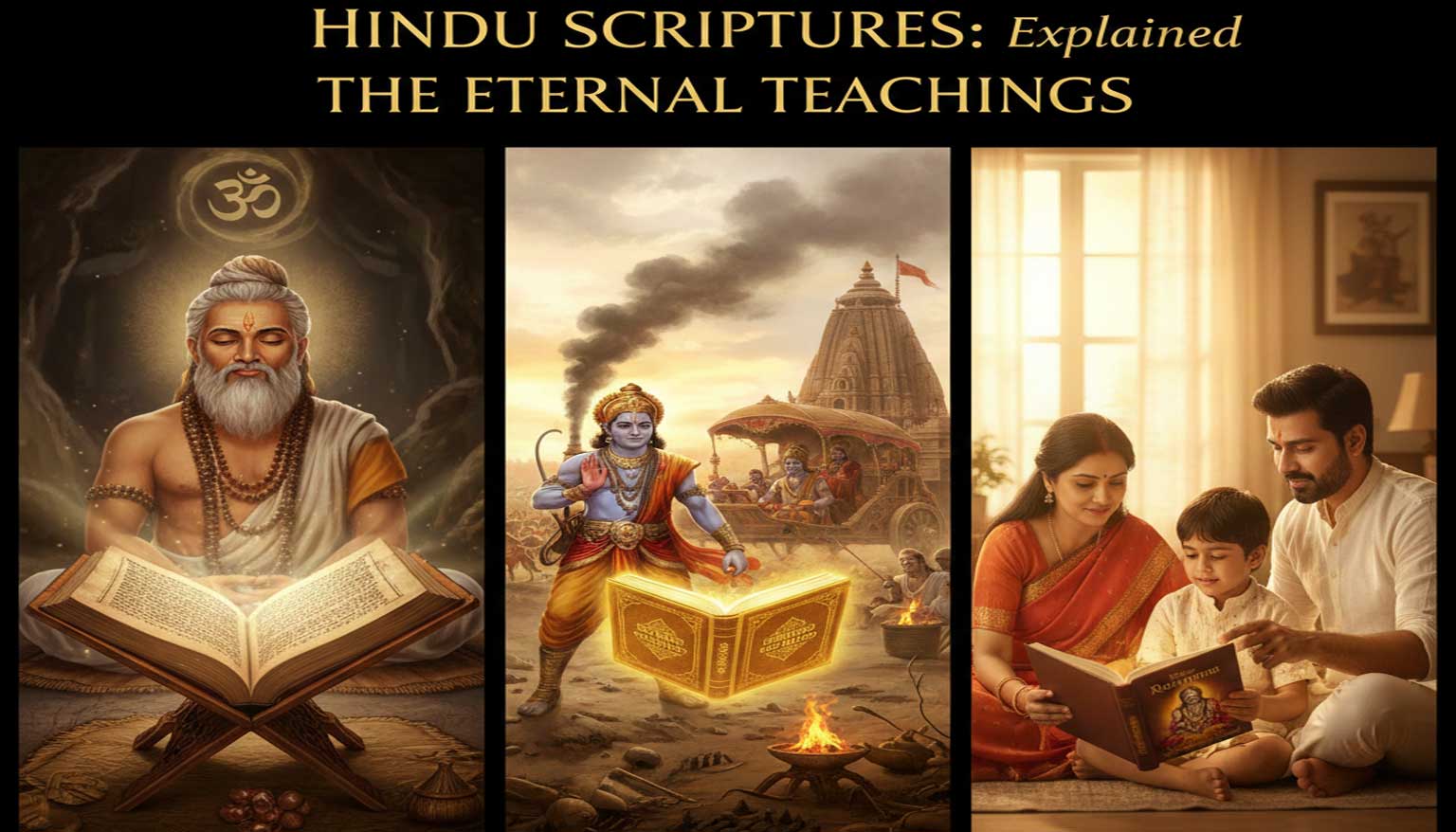
Hindu Scriptures Explained: A Guide to Shruti, Smriti, and Core Teachings
Hinduism, often referred to as Sanatana Dharma (the eternal way), is built upon a vast library of ancient texts that offer guidance on everything from spiritual liberation to daily social conduct. To understand these scriptures is to understand the soul of one of the world’s oldest living religions.
This guide provides a comprehensive breakdown of Hindu scriptures, their classifications, and the core teachings that continue to influence millions today.
1. The Two Pillars: Shruti vs. Smriti
The foundation of Hindu literature is divided into two distinct categories based on their perceived origin and authority.
Shruti: That Which is Heard
Shruti refers to divine revelation. These texts are considered “apauruṣeya” (not of human origin) and were “heard” or realized by ancient sages (Rishis) in deep states of meditation. Because they represent eternal truths, they hold the highest authority.
- Vedas: The primary source of knowledge.
- Upanishads: The philosophical “end” of the Vedas.
Smriti: That Which is Remembered
Smriti refers to tradition and human memory. These texts were composed by sages to interpret and apply the wisdom of Shruti to changing social and historical contexts.
- Itihasas: Epics like the Ramayana and Mahabharata.
- Puranas: Encyclopedic texts containing stories of gods and cosmology.
- Dharma Shastras: Law books and ethical manuals.
2. The Four Vedas: The Source of Wisdom
The Vedas are the oldest scriptures of Hinduism, composed between 1500 and 500 BCE. There are four Vedas, each serving a specific purpose:
- Rig Veda: The Veda of hymns. It contains 1,028 hymns dedicated to various deities like Agni (fire) and Indra (thunder).
- Sama Veda: The Veda of melodies. It consists of verses from the Rig Veda set to musical notation for chanting during rituals.
- Yajur Veda: The Veda of rituals. It provides the instructions and mantras for performing sacrificial rites.
- Atharva Veda: The Veda of everyday life. It contains prayers for health, protection, and spells for daily well-being.
Each Veda is further divided into four sections:
- Samhitas: The core mantras and hymns.
- Brahmanas: Commentaries on rituals.
- Aranyakas: Meditations for forest-dwelling hermits.
- Upanishads: Philosophical inquiries into the nature of reality.
3. The Upanishads and the Essence of Vedanta
Commonly known as Vedanta (the end or culmination of the Vedas), the Upanishads shift the focus from external rituals to internal self-realization. They explore the relationship between the individual soul (Atman) and the ultimate reality (Brahman).
The core teaching of the Upanishads is encapsulated in the phrase “Tat Tvam Asi“ (That Thou Art), suggesting that the individual’s essence is identical to the divine.
4. The Epics and the Bhagavad Gita
The Itihasas (History) bring complex philosophy to life through narrative.
The Mahabharata and the Bhagavad Gita
The Mahabharata is the world’s longest epic, depicting a great war between the Pandavas and the Kauravas. Within its chapters lies the Bhagavad Gita, a 700-verse dialogue between Prince Arjuna and Lord Krishna.
- Teachings: The Gita introduces the three paths to liberation: Karma Yoga (Action), Bhakti Yoga (Devotion), and Jnana Yoga (Knowledge).
The Ramayana
The Ramayana tells the story of Lord Rama’s quest to rescue his wife, Sita, from the demon king Ravana. It serves as a masterclass in Dharma (duty), portraying Rama as the ideal king, Sita as the ideal wife, and Hanuman as the ideal devotee.
5. Core Teachings of Hindu Scriptures
While the texts are diverse, several central themes unify the Hindu scriptural tradition:
| Concept | Meaning | Teaching |
| Dharma | Duty/Order | Living in alignment with cosmic and moral law. |
| Karma | Action/Effect | The law of cause and effect; every action has a consequence. |
| Samsara | Rebirth | The cycle of birth, death, and reincarnation. |
| Moksha | Liberation | Freedom from the cycle of rebirth and union with the Divine. |
| Brahman | Supreme Reality | The unchanging, infinite reality that underlies the universe. |
Summary: A Living Tradition
Hindu scriptures are not static museum pieces; they are living guides. From the ritualistic precision of the Vedas to the profound philosophy of the Upanishads and the heroic narratives of the Epics, these texts offer a map for the human soul to navigate the complexities of life toward the ultimate goal of liberation.