Understanding Moksha: Liberation and Spiritual Freedom
Introduction
Moksha stands as one of the most profound concepts in Hindu spirituality, representing the ultimate goal of human existence. This ancient Sanskrit term encapsulates the idea of liberation, release, and spiritual freedom from the cycle of birth and death. Understanding Moksha requires exploring its philosophical depths, practical applications, and transformative potential in daily life.
What is Moksha?
Moksha literally means “liberation” or “release” in Sanskrit. It represents freedom from samsara, the endless cycle of rebirth driven by karma. Unlike temporary pleasures or achievements, Moksha offers permanent liberation from all suffering, limitation, and ignorance. The liberated soul (jivanmukta) experiences eternal bliss and unity with the Divine while still living in the physical body.
Etymology and Scriptural Foundation
The word Moksha derives from the Sanskrit root “muc,” meaning “to loose” or “to release.” The Katha Upanishad declares: “When all desires that dwell in the heart are cast away, then the mortal becomes immortal and attains Brahman here.” The Bhagavad Gita (4.9) states: “One who knows the divine nature of My birth and actions, having left the body, is not born again, but attains Me.”
The Four Paths to Moksha
Hindu tradition outlines four primary yogic paths leading to liberation:
- Jnana Yoga – The path of knowledge and wisdom, using intellectual inquiry to realize the Self
- Bhakti Yoga – The path of devotion and love, surrendering to the Divine through worship
- Karma Yoga – The path of selfless action, performing duty without attachment to results
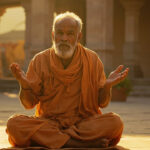
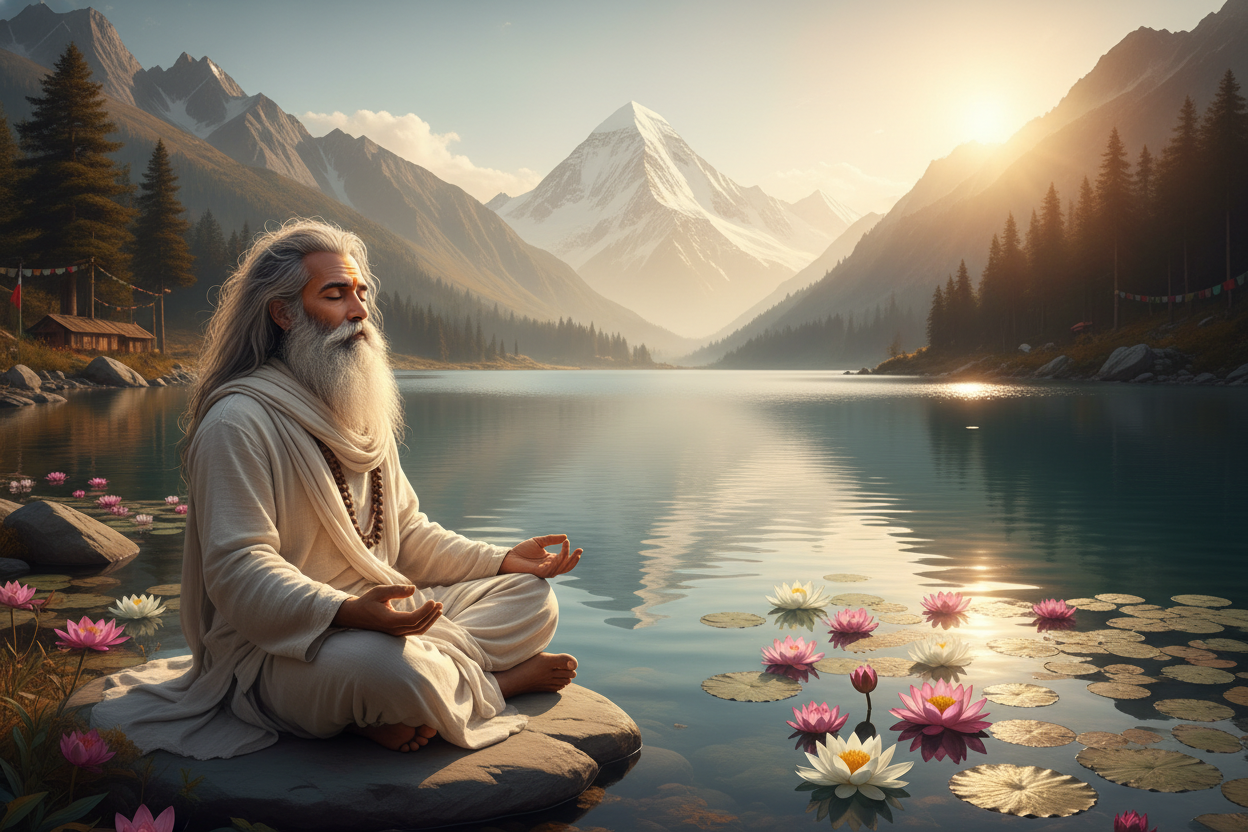
- Raja Yoga – The path of meditation and mental control, stilling the mind to experience Truth
The Role of Karma in Achieving Moksha
Karma, the law of cause and effect, binds souls to the cycle of rebirth. Every action creates consequences that must be experienced. Moksha requires transcending karma through:
- Performing actions without attachment (nishkama karma)
- Exhausting accumulated karma through experience
- Burning seeds of future karma through knowledge
The Bhagavad Gita (2.56) describes the sage whose mind remains undisturbed by sorrow and free from desire for pleasure.
Jnana Yoga: Knowledge as Liberation
Jnana Yoga uses discrimination between real and unreal to realize the Self. Through study of scriptures, contemplation, and meditation, the seeker understands that the individual soul (atman) is identical with the universal reality (Brahman). This knowledge destroys ignorance, the root cause of bondage.
Bhakti Yoga: Love as Liberation
Bhakti Yoga transforms emotions into divine love. Through prayer, worship, chanting, and service, the devotee develops intense love for God. This love burns away ego and selfishness, leading to complete surrender. The Ramayana exemplifies perfect bhakti through Hanuman’s unwavering devotion to Rama.
Moksha in Daily Life
While Moksha is the ultimate goal, its principles transform daily living:
- Practicing detachment reduces anxiety and suffering
- Selfless service cultivates compassion and humility
- Regular meditation brings inner peace and clarity
- Understanding the eternal nature of the soul reduces fear of death
Common Misconceptions About Moksha
Several misunderstandings obscure Moksha’s true nature:
- Misconception: Moksha means escaping life entirely
Reality: It means living freely while engaged in the world - Misconception: Only monks can achieve Moksha
Reality: Householders can attain liberation through sincere practice - Misconception: Moksha is selfish or escapist
Reality: Liberated beings serve humanity spontaneously and joyfully
Conclusion
Moksha represents the highest aspiration of human life, offering freedom from all limitation and suffering. Through the four yogic paths, sincere practitioners can realize their divine nature and experience eternal bliss. The journey requires dedication, discrimination, and devotion, but the destination—spiritual freedom—transforms every moment of existence.
FAQ: Understanding Moksha
Q1: What is the difference between Moksha and Nirvana?
A: Moksha (Hindu) and Nirvana (Buddhist) both mean liberation, but Moksha emphasizes union with Brahman while Nirvana emphasizes extinguishing desire and ego.
Q2: Can Moksha be achieved in this lifetime?
A: Yes, jivanmukti means liberation while living. The realized soul experiences freedom even in the physical body.
Q3: Is Moksha only for Hindus?
A: No, spiritual liberation transcends religious labels. Any sincere seeker can realize Truth through authentic practice.
Q4: How long does it take to achieve Moksha?
A: Time varies based on sincerity, practice, and grace. Some achieve it quickly; others progress gradually over lifetimes.
Q5: What happens after achieving Moksha?
A: The liberated soul experiences eternal bliss, unity with the Divine, and freedom from rebirth. Many continue serving others spontaneously.
Internal links: What is Karma? (Post 681), Why Does Hinduism Have So Many Gods? (Post 698), What is Dharma? (Post 704)