Why Do Hindus Cremate the Dead? Hindu Funeral Rites Explained
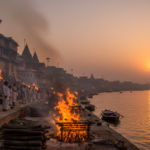
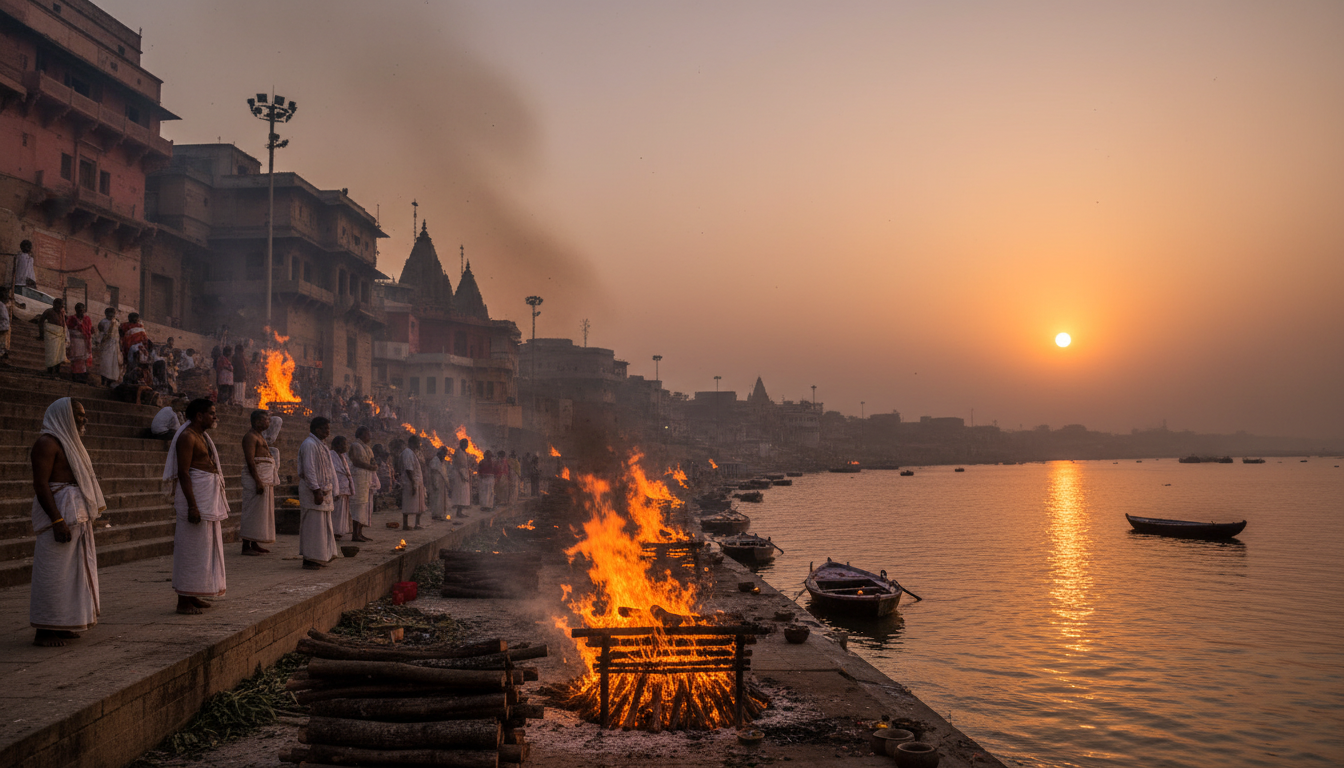
When a Hindu passes away, their body is typically cremated within 24 hours, often on a funeral pyre near a sacred river. This ancient practice, called Antyesti (last sacrifice), is one of the most distinctive Hindu rituals. But why do Hindus cremate their dead instead of burying them? What spiritual significance does fire hold in this final journey? And how do these funeral rites help the soul transition to its next destination?
The Spiritual Philosophy Behind Hindu Cremation
Death as Transition, Not End
In Hindu philosophy, death is not the end of existence but merely a transition. The Bhagavad Gita (Chapter 2, Verse 22) beautifully explains this concept:
“Just as a person sheds worn-out garments and wears new ones, likewise, at the time of death, the soul casts off its worn-out body and enters a new one.”
This understanding shapes every aspect of Hindu funeral rites. The body is seen as a temporary vessel—a garment worn by the eternal soul (atman) during its journey through countless lifetimes. When death occurs, the soul is ready to move on, and cremation serves as the final act of releasing it from its earthly attachment.
The Five Elements Theory (Pancha Mahabhuta)
Hindu cosmology teaches that everything in the physical universe, including the human body, is composed of five great elements:
- Earth (Prithvi) – bones, flesh, solid structures
- Water (Jala) – blood, bodily fluids
- Fire (Agni) – heat, digestion, metabolism
- Air (Vayu) – breath, movement
- Space/Ether (Akasha) – cavities, consciousness
Death occurs when these elements begin to disintegrate. Cremation accelerates this natural process, returning the body to its elemental state—primarily through fire and air. The ashes are then immersed in water (usually a sacred river), completing the cycle of returning all five elements to nature.
Antyesti: The Last Sacrifice
What Does Antyesti Mean?
The Sanskrit word Antyesti (अन्त्येष्टि) comes from two roots:
- Anta = end, final
- Yesti = sacrifice, offering
Thus, Antyesti literally means “the last sacrifice.” It’s called a sacrifice because the funeral rites represent the final yajna (sacred offering) that family members perform for the departed. Just as fire sacrifices are offered to deities during life, the cremation fire becomes the final offering, dedicating the physical body back to the cosmic elements.
The Sacred Role of Fire (Agni)
Fire holds a uniquely sacred position in Hinduism:
- Agni as Divine Messenger: Fire is considered the messenger between humans and gods. In Vedic rituals, offerings are made through fire, which carries them to the divine realm.
- Agni as Purifier: Fire is the ultimate purifier, burning away impurities and transforming matter into energy and ash.
- Agni as Witness: Fire witnesses all major Hindu sacraments—from birth ceremonies to marriage. It’s only fitting that fire also witnesses the final sacrament.
- Agni as Liberator: The cremation fire is believed to liberate the soul from its attachment to the physical body, enabling smooth transition to the next realm.
The Rig Veda (10.16.1) contains a prayer addressed to Agni during cremation:
“O Fire, lead this departed soul by the bright path to the realm of the ancestors. You know all paths; guard them from harm and deliver them to the pious.”
The Hindu Cremation Ritual: Step by Step
1. Preparation of the Body (Within 24 Hours)
Hindu tradition emphasizes cremating the body as soon as possible, ideally within 24 hours of death. This practice has both spiritual and practical significance:
- Spiritual: Quick release of the soul from earthly ties
- Practical: In India’s tropical climate, rapid decomposition makes swift disposition necessary
The body is washed with water, often mixed with Ganga jal (water from the Ganges), sandalwood paste, and turmeric. Family members may dress the deceased in fresh white or traditional clothing. The big toe of the right foot is often tied, and hands are placed in a prayer position.
2. The Funeral Procession
The body is placed on a bamboo stretcher or traditional bier and carried by male family members (traditionally sons or male relatives) to the cremation ground (shmashana). The procession is accompanied by chanting of sacred mantras, particularly:
- “Ram Nam Satya Hai” (God’s name is truth)
- Vedic hymns from the Garuda Purana
- Naming of God (Ram, Krishna, Shiva, etc.)
Traditionally, the body is carried feet-first, symbolizing that the departed is walking toward their next journey. Mourners walk barefoot as a sign of respect and humility.
3. The Cremation Pyre
At the cremation ground, the pyre is prepared with sandalwood logs and other sacred woods. The body is placed on the pyre with the head facing south—the direction associated with Yama, the god of death.
The chief mourner (traditionally the eldest son or closest male relative) performs the key rituals:
- Circumambulation: Walking around the pyre counter-clockwise (opposite of normal ritual direction, symbolizing reversal of life’s journey)
- Lighting the Pyre: Using a sacred flame, the chief mourner ignites the pyre while reciting prayers
- Kapala Kriya: ritually cracking the skull with a bamboo stick to release the soul (symbolic in modern crematoriums)
4. Collection of Ashes (Asthi Sanchayana)
After cremation is complete (typically 2-3 hours), the ashes and bone fragments (asthi) are collected. This is done carefully, as these remains are considered sacred.
The ashes are placed in a copper or brass vessel and preserved until they can be immersed in a sacred body of water—ideally the Ganges River at holy sites like:
- Haridwar – One of the four Kumbh Mela sites
- Varanasi (Kashi) – The holiest Hindu city, believed to grant liberation
- Prayagraj – Confluence of Ganges, Yamuna, and Saraswati
- Rishikesh – Gateway to the Himalayas
- Local sacred rivers – If travel to major sites isn’t possible
5. The Immersion Ceremony (Asthi Visarjana)
Within 10-13 days after cremation, family members perform the immersion ceremony. The ashes are taken to a sacred river and immersed with prayers for the soul’s peaceful journey. This act completes the physical dissolution of the body and returns all elements to nature.
The 13-Day Mourning Period
Hindu tradition observes a 13-day mourning period after death, with specific rituals on key days:
Days 1-10: Initial Mourning
- Family observes ritual purity restrictions
- Daily prayers and offerings for the departed soul
- Simple vegetarian meals (no salt, spices, or luxuries)
- Mirrors may be covered; no celebrations or festivals
Day 13: Shraddha Ceremony
The 13th day marks an important milestone called Shraddha or Terahvin:
- Special prayers and fire rituals (havan)
- Feeding Brahmins or the poor in the departed’s name
- Offerings of food, water, and sesame seeds
- Formal end of the mourning period
After the 13th day, normal life resumes, though annual death anniversary rituals (Tithi) are observed yearly.
Why Cremation Over Burial?
Spiritual Reasons
1. Faster Soul Release: Fire rapidly dissolves the physical form, freeing the soul from attachment to the body. Burial allows slower decomposition, which some traditions believe delays the soul’s transition.
2. Complete Purification: Fire is considered the purest element, burning away all karmic residues and impurities attached to the physical body.
3. Prevention of Negative Energies: An intact body is believed to potentially attract negative energies or spirits. Cremation prevents this possibility.
4. Alignment with Natural Elements: Cremation returns the body to fire and air immediately, with ashes returning to water—completing the elemental cycle efficiently.
Practical Reasons
1. Public Health: In densely populated regions with tropical climates, cremation prevents disease spread and contamination of soil and groundwater.
2. Land Conservation: Cremation requires no burial land, important in land-scarce regions like India.
3. Portability: Ashes can be transported to sacred rivers, fulfilling the religious requirement regardless of where death occurred.
Exceptions: When Hindus Bury Instead of Cremate
While cremation is the norm, certain exceptions exist:
1. Saints and Holy Persons
Realized souls, saints, and sadhus are often buried rather than cremated. Their bodies are considered already purified through spiritual practice. They’re typically buried in a seated meditation posture (samadhi), and a memorial shrine is built over the site.
2. Young Children (Below Age 5)
Young children, considered pure and without significant karma, are buried rather than cremated. Their funerals are simpler, with less elaborate rituals.
3. Victims of Certain Diseases or Deaths
In some traditions, those who died from specific diseases (like smallpox, historically associated with Goddess Shitala) or unusual circumstances may be buried.
4. Modern Crematorium Limitations
In countries where open-air cremation isn’t legally permitted, Hindus use modern crematoriums. The spiritual intention remains the same, even if the method differs.
Common Questions About Hindu Cremation
Is cremation mandatory in Hinduism?
While strongly preferred and considered most auspicious, cremation isn’t absolutely mandatory. Burial is acceptable when cremation isn’t possible due to legal, practical, or situational constraints. The spiritual intention matters more than the method.
Can Hindus attend non-Hindu funerals?
Yes, Hindus can and should attend funerals of friends and family from other faiths as a gesture of respect and support. While the rituals differ, the intention of honoring the departed and supporting the bereaved is universal.
What if cremation can’t happen within 24 hours?
Modern circumstances (travel, legal requirements, family gathering) may delay cremation. This is acceptable. The body can be refrigerated, and the spiritual intention remains valid regardless of timing.
Are women allowed to attend cremations?
Traditions vary by region and family. In some areas, women don’t attend the actual cremation but participate in other funeral rituals. In modern practice, many families allow women to attend all funeral rites. This is ultimately a family decision.
What is the significance of offering rice balls (pinda)?
During funeral rites, rice balls mixed with sesame seeds (pinda) are offered to nourish the departed soul during its journey. These offerings help the soul transition smoothly to the ancestral realm (Pitr Loka).
The Deeper Meaning: Love, Liberation, and Letting Go
Beyond ritual and philosophy, Hindu cremation rites serve profound emotional and psychological purposes:
Processing Grief Through Ritual
The elaborate funeral procedures give mourners structured ways to express grief, honor the departed, and gradually accept the loss. Each ritual provides a step in the healing journey.
Teaching Impermanence
Witnessing the body’s dissolution in fire powerfully reinforces the Hindu teaching of impermanence (anitya). This helps survivors reflect on their own mortality and live more consciously.
Community Support
Funeral rites bring family and community together, providing emotional support during difficult times. The collective participation in rituals strengthens social bonds.
Continuing Connection
Annual death anniversary rituals (Tithi) and offerings during Shraddha fortnight maintain a spiritual connection with ancestors, honoring their memory and seeking their blessings.
Conclusion: Fire as Final Act of Love
Hindu cremation is far more than mere body disposal. It’s a sacred fire ritual that:
- Releases the soul from its earthly vessel
- Returns the body to the cosmic elements
- Purifies through Agni’s sacred flame
- Provides closure for grieving families
- Reaffirms faith in the soul’s eternal journey
The cremation fire is both an ending and a beginning—the final act of love that parents, children, and family members perform for their departed loved one. Through this ancient practice, Hindus affirm their belief that death is not the end, but merely a transition in the soul’s eternal journey through countless births and deaths, ultimately seeking liberation (moksha) from the cycle itself.
As the flames rise and the mantras chant, the physical form dissolves, but the love, memories, and spiritual connection transcend death itself—because in Hindu understanding, the soul never dies; it merely changes its garment and continues its journey toward the divine.