How to Do Puja at Home: A Complete Step-by-Step Guide for Beginners
For millions of Hindus worldwide, puja is not merely a ritual—it’s a daily conversation with the divine. Whether you’re setting up your first worship corner or looking to deepen your understanding of the practice, this guide walks you through everything you need to perform puja at home with meaning, devotion, and correctness.
What is Puja? Understanding the Meaning Behind the Ritual
The word “puja” (पूजा) comes from the Sanskrit root puj, meaning “to honor” or “to worship.” In Hindu tradition, puja is the ritualistic worship of a deity—though fundamentally, it’s about creating a space where the devotee and the divine can connect.
Unlike congregational worship in some other religions, puja is deeply personal. You invite the deity into your home, treat them as an honored guest, offer what you have, and receive their blessings. It’s a two-way relationship rooted in love, not transaction.
Puja can be performed daily, weekly, or on special occasions. Many Hindu households perform a brief morning puja (suprabhata), while others conduct elaborate ceremonies on festival days. The beauty of puja lies in its flexibility—you can begin simply and grow into deeper practices over time.
Items Needed for Puja (Puja Samagri)
Before beginning, gather these essential items. You don’t need everything at once—start with what you have:
Basic Puja Items:
- Idol or Image (Murti/Patra): A picture or statue of the deity you worship (Ganesha, Lakshmi, Shiva, Durga, etc.)
- Puja Thali (Brass Plate): A plate to arrange offerings
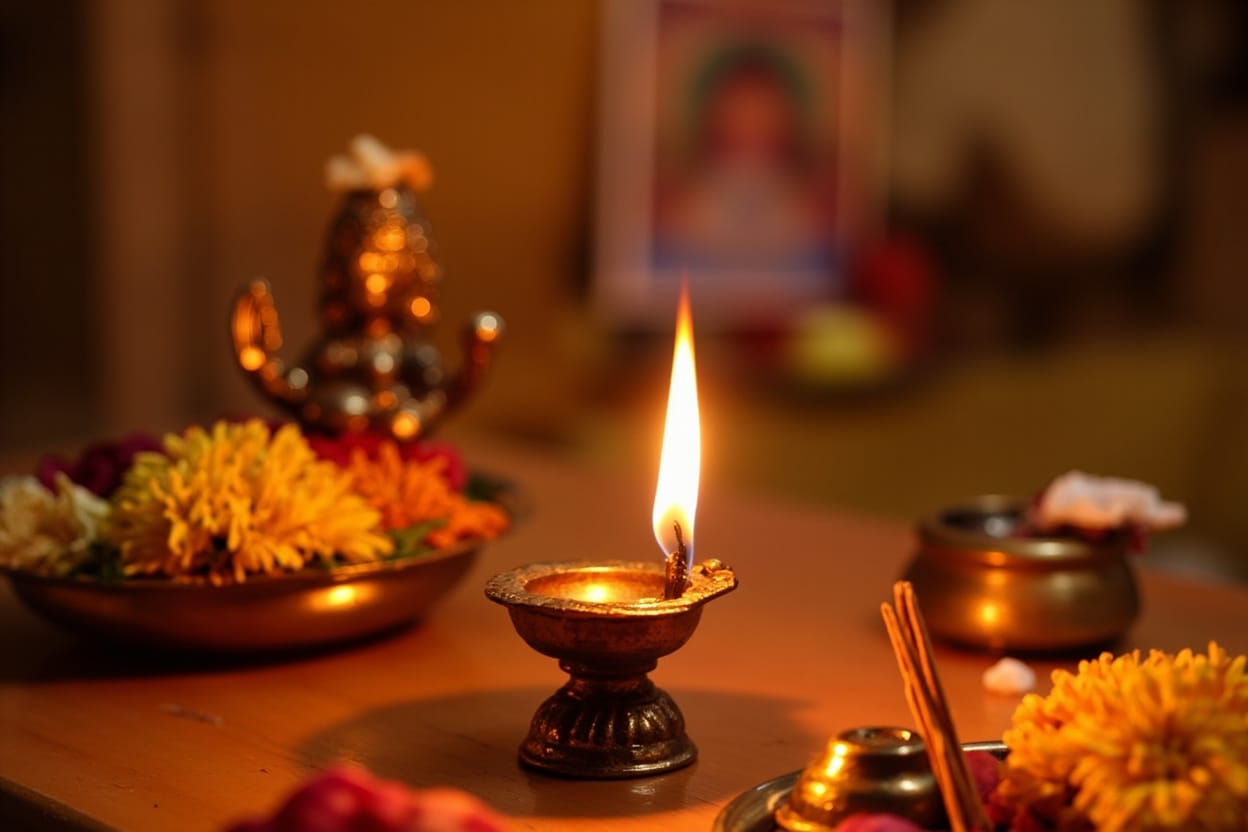
- Diya (Oil Lamp): Brass or earthen lamp with mustard oil or ghee
- Camphor (Kapoor): For aarti
- Incense Sticks (Agarbatti): Fragrant incense
- Flowers (Pushpa): Marigolds, roses, or any fresh flowers• Rice (Akshat): Whole uncooked rice grains
- Turmeric (Haldi): Sacred yellow powder
- Sandalwood Paste (Chandan): Fragrant paste for tilak
- Coconut (Nariyal): Offered as Prasad• Fruits (Phal): Seasonal fruits as offering
- Bell (Ghanta): rung during aarti
- Water (Jala): For purification
Pro Tip: Prepare your samagri the night before. Having everything ready removes chaos from the ritual and helps you stay focused and meditative.
Preparing Your Puja Space
Your puja space—called the mandir or puja ghar—doesn’t need to be elaborate. A clean, quiet corner is enough.
Choose the right spot:
- East or north-facing wall is considered auspicious
- The space should be clean, elevated, and free from disturbances
- Avoid placing the puja near bathrooms or feet
Set up your altar: - Clean the area with water and turmeric water
- Place a cloth (preferably red or yellow) on the surface
- Position your deity image so you face east or north while worshipping
- Light a diya and incense before you begin
The intention behind preparation matters as much as the act itself. Cleaning your puja space is also about purifying your mind—removing mental clutter before approaching the divine.
Step-by-Step Puja Procedure
Follow these 16 steps for a complete traditional Hindu puja:
Step 1: Bathe and Prepare (Snana)
Bat He or shower and wear clean clothes before approaching the puja. Touchful, your body is the first offering.
Step 2: Sit Facing East or North
Sit comfortably in front of your puja space. Close your eyes, take three deep breaths, and center your mind. Set your intention for the puja.
Step 3: Sankalpa (Resolution)
Silently state your purpose: “I perform this puja for the welfare of all beings, for the fulfillment of my duties, and for the glory of the divine.”
Step 4: Shaped the Area (Parartha)
Light a lamp (deep) to illuminate the space and invite the deity. Light camphor or a second lamp if available.
Step 5: Invoke Ganapati (Vighnaharta)
Always begin by worshipping Lord Ganesha, the remover of obstacles. Place a small image or offer turmeric and flowers to Ganesha. Ring the bell and chant:
“Vakratunda Mahakaya Surya Koti Samaprabha | Nirvighnam Kuru Me Deva Sarva Karyeshu Sarvada ||”
Step 6: Invoke the Main Deity (Murti Pujan)
Now invite your chosen deity. Touch water to your head and offer it to the deity. Apply sandalwood paste to the image. Offer flowers, rice, and turmeric. Ring the bell and chant the deity’s main mantra (e.g., “Om Shrim Lakshmiye Namaha” for Lakshmi).
Step 7: Offer Water (Argham)
Offer water in a small vessel—symbolizing purification and hospitality.
Step 8: Offer Flowers (Pushpam)
Place fresh flowers at the lotus feet of the deity. If offering garlands, hang them around the deity’s neck or image.
Step 9: Offer Incense (Dhupam)
Light incense and wave it before the deity in a circular motion, starting from your right and moving clockwise. The fragrance symbolizes the spreading of devotion.
Step 10: Offer Light (Dipam)
Wave the lit camphor or a diya in circular motions before the deity. This is aarti—the most loving act of showing light to the divine. Chanting “Om Jai Jagdish Hare” or any bhajan during this step is common.
Step 11: Offer Food (Naivedyam)
Offer prepared food—sweet rice, fruits, coconut, or any Prasad—to the deity. Place it before the image and step back. After a few minutes, it’s considered the deity’s blessing and can be consumed as Prasad.
Step 12: Prostrate (Namaskara)
Bend down and touch the floor before the deity. Lie flat (Shravanam) if possible. This expresses complete surrender and gratitude.
Step 13: Recite Stotras or Mantras
Chant a few verses from the Bhagavad Gita, or any stotra dedicated to your deity. Even reading one verse with understanding is powerful.
Step 14: Meditation (Dhyana)
Sit quietly for 2-5 minutes. Visualize the deity’s form, feeling their presence. Let your mind settle into peace.
Step 15: Pranayama (Breathing)
Take 5-10 deep breaths. Feel the prana (life force) entering through the space you’ve created. This connects your breath to the divine.
Step 16: Conclude (Visarjana)
Gently remove the deity’s image or close the door. Fold the cloth. Dispose of offerings respectfully. Touchful, the divine resides within you always.
What Each Step Means (Spiritual Significance)
Each element of puja carries deep symbolic meaning:
- Lighting the diya represents removing darkness from our minds—awakening wisdom
- Incense symbolizes good thoughts spreading outward, like fragrance
- Flowers represent beauty, impermanence, and our surrender
- Water signifies purity and the flow of life
- Food offering teaches non-attachment—we offer what we have and receive with gratitude
- Prostration dissolves the ego
When you understand the meaning behind each step, puja transforms from a mechanical ritual into a deeply spiritual experience. You’re not just performing actions—you’re communicating with the divine through every gesture.
Common Mistakes to Avoid
- Rushing through puja: Quality matters more than speed. Even 10 minutes of mindful puja is better than 30 minutes of distracted ritual.
- Comparing your puja to others: There’s no “right” amount of time or “correct” elaborate setup. Start where you are.
- Worrying about mistakes: If you miss a step, simply continue. Intention matters more than perfection.
- Using low-quality items: The divine isn’t concerned with expense—but use what you offer with respect.
- Skipping the prayer: Many people rush to the aarti but skip the sankalpa and mantra recitation. The words give power to the ritual.
Frequently Asked Questions
No. Hindu puja is designed for household worship. Any devotee can perform it with sincere intention. Priests are needed for specific complex rituals or temple ceremonies.
Yes. Many Hindus worship formless (Nirakar) Brahman with meditation and breath rituals alone. The external form is a tool—the internal devotion is what matters.
Most householders do puja once in the morning (Brahma Muhurta, around 4-6 AM) or after sunrise. Some do it twice—morning and evening. Start with once and let it grow naturally.
There’s no sin in missing a day due to travel, illness, or circumstances. Simply resume when you can. Consistency with sincerity matters more than rigid perfection.
Lord Ganesha is traditionally worshipped first as the remover of obstacles. After establishing Ganesha, proceed to your ishta-devata (chosen personal deity).