Why Does Hinduism Have So Many Gods?
If you have ever wondered why does Hinduism have so many gods, you are not alone. The popular claim that Hinduism worships “33 million gods” is one of the most repeated misconceptions about the tradition. The real answer is more nuanced, more interesting, and far more comforting than the stereotype: Hinduism recognizes one ultimate reality manifesting in countless forms. The vast pantheon is not contradiction; it is radical inclusivity.
This guide unpacks the philosophy behind Hindu polytheism, the meaning of Brahman, the role of the Trimurti and avatars, and why the tradition treats divine form as a tool of devotion rather than a category to be limited.
The “33 Million Gods” Misconception
Western popular culture often states that Hinduism has 33 million gods (33 koti). The figure comes from the Rig Veda, but the word koti does not mean “million.” It means “type,” “category,” or “supreme category.” The Vedas speak of 33 koti of deities — meaning 33 categories of divine beings, not 33 million individuals. Later texts such as the Puranas expanded the catalogue to include thousands of named gods, goddesses, demigods, and celestial beings, but the underlying claim is symbolic, not literal.
Most practicing Hindus do not believe there are 33 million literally distinct beings. They follow a smaller, deeply personal set of deities. The larger catalogue reflects the tradition’s recognition that the divine can manifest in an infinite variety of forms.
Brahman: The One Reality Behind All Forms
At the center of Hindu philosophy sits Brahman — the formless, infinite, ultimate reality that underlies and pervades all existence. The Rig Veda declares:
“Ekam Sat, Vipra Bahudha Vadanti” — “Truth is One; the wise call it by many names.”
Think of Brahman like electricity. You cannot see it directly, but you see its manifestations: light, heat, motion, charge. The gods and goddesses of Hinduism are accessible forms of this formless Divine. They are not competitors with Brahman; they are its expressions.
This philosophical position is often called monism (everything is one) combined with henotheism (worship of one deity at a time while acknowledging others). It is neither strict monotheism nor simple polytheism. It is a third option, one the West rarely names.
The Trimurti: Three Faces of Cosmic Function
One of the most recognizable structures in Hinduism is the Trimurti — the three cosmic functions expressed as three deities:
- Brahma (the Creator) — brings universes into being. Worshipped less frequently today, partly because the creative function is associated with an act that has already happened.
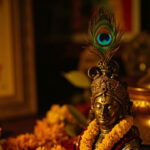
- Vishnu (the Preserver) — maintains cosmic order, or dharma. Vishnu descends periodically as an avatar to restore balance when dharma declines.
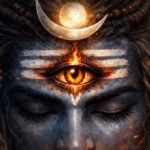
- Shiva (the Transformer) — dissolves what is no longer needed, making room for renewal. Associated with destruction only in the sense of composting, not annihilation.
These are not three gods competing for territory. They are three roles played by the one Divine — the way a single actor plays father, judge, and friend in different scenes of a film. The functions are distinct, the source is one.
The Divine Feminine: Devi and Shakti
One of Hinduism’s most distinctive features is its reverence for the divine feminine. The concept of Shakti — the cosmic creative energy — is fundamentally feminine, and the Goddess (Devi) is worshipped in many forms:
- Parvati — the gentle mother, consort of Shiva
- Durga — the fierce protector, warrior goddess who defeats demons
- Lakshmi — the goddess of wealth, prosperity, and fortune
- Saraswati — the goddess of knowledge, music, and learning
- Kali — the transformative destroyer of ego and evil
Many Hindu traditions — particularly Shakta traditions — hold Devi to be the supreme being herself, with Brahma, Vishnu, and Shiva as her manifestations. The Devi Mahatmya, part of the Markandeya Purana, declares the Goddess as the source of all creation.
Devas: Cosmic Forces, Not Creator Gods
Many figures in the Hindu pantheon are devas — cosmic functionaries who manage specific aspects of the universe:
- Indra — king of the devas, associated with rain and storms
- Agni — the fire god, mediator between humans and the divine
- Varuna — cosmic order, water, the moral law
- Surya — the sun
- Vayu — the wind
- Yama — death and the afterlife
These are not creators of the universe in the Abrahamic sense. They are powerful beings with specific roles, somewhat like department heads in a vast cosmic administration. The gods themselves are bound by dharma and by the cycle of birth, death, and rebirth.
Avatars: Divine Descents for Cosmic Balance
When dharma declines and disorder rises, the divine descends to restore balance. These descents are called avatars (literally “descents”). The most famous are the ten avatars of Vishnu:
- Matsya — the fish who saves the Vedas from a cosmic flood
- Kurma — the tortoise who supports the mountain during the churning of the ocean
- Varaha — the boar who rescues the earth from a demon
- Narasimha — the man-lion who protects a devotee from persecution
- Vamana — the dwarf who outwits a demon king
- Parashurama — the warrior-sage who cleanses the earth of corrupt rulers
- Rama — the ideal king, hero of the Ramayana
- Krishna — the divine teacher, hero of the Mahabharata and the Bhagavad Gita
- Buddha — many Hindu traditions include the Buddha as an avatar of Vishnu
- Kalki — the future avatar, who will appear at the end of the present age
Avatars are not incarnations in the Christian sense; they are tactical descents of the Divine into forms that can act decisively in the world.
Ishta Devata: Choosing Your Personal Form of the Divine
Hinduism is unusual in encouraging a personal, devotional relationship with a chosen form of the divine — your Ishta Devata (literally “chosen deity”). Most Hindus worship one deity as their primary focus, while acknowledging the existence and validity of all others.
Students often invoke Saraswati (knowledge). Householders worship Lakshmi (prosperity). Devotees of Shiva wear the three horizontal lines of vibhuti; devotees of Vishnu wear the vertical tilak (U- or Y-shaped). The choice is usually shaped by family tradition, guru guidance, and personal resonance.
This is why a Hindu temple can be a Shiva temple, a Vishnu temple, a Devi temple, or a Ganesha temple — each is a doorway into the same infinite reality.
Philosophical Schools: Different Lenses on the Divine
Hindu philosophical schools (darshanas) interpret the divine in distinct ways:
- Advaita Vedanta (Shankara) — there is only one reality (Brahman); the multiplicity of gods is a lower truth for those not yet ready to grasp unity.
- Vishishtadvaita (Ramanuja) — Brahman is one, but manifests through many divine personalities; Vishnu and the goddess are real, eternal, and personal.
- Dvaita (Madhva) — God (Vishnu) and the individual soul are eternally distinct; devotion to a personal God is the highest path.
All three are orthodox Hindu positions. The differences matter, but they do not fracture Hinduism into separate religions.
Historical Evolution: How the Pantheon Grew
The Hindu pantheon evolved over thousands of years. The Vedic period (roughly 1500–500 BCE) emphasized devas like Indra and Agni. The post-Vedic period (500 BCE onward) elevated Vishnu, Shiva, and the Goddess into central positions. The Puranic period (300–1200 CE) further developed the regional, devotional traditions that most modern Hindus practice today.
Local deities and folk traditions were also absorbed into the larger fold. Village goddesses became forms of the supreme Devi. Regional heroes became minor avatars. The tradition’s ability to absorb new forms, rather than reject them, is part of why the pantheon grew so large.
Why So Many Gods? The Hindu Logic of Inclusive Divinity
The vastness of the Hindu pantheon is not accidental. It reflects a deliberate philosophical choice: that the Divine can be approached in any form that the devotee can love. A child needs gentleness — Parvati provides it. A warrior needs protection — Durga provides it. A scholar needs inspiration — Saraswati provides it. A grieving soul needs a companion in sorrow — Krishna provides it.
This is radical inclusivity. It also matches what modern psychology calls multiple intelligences — different minds connect to the sacred through different doors. Forbidding one form is forbidding an entire category of souls from approaching the Divine.
Common Questions About Hindu Deities
Do Hindus actually worship 33 million gods?
No. The figure 33 koti (often mistranslated as 33 million) refers to 33 categories of divine beings, mentioned in the Rig Veda. Most Hindus focus on a small number of deities, often one primary Ishta Devata, while acknowledging the existence of the larger pantheon.
Is Hinduism polytheistic, monotheistic, or monistic?
All three, depending on the tradition and the school. Popular practice often looks polytheistic (many gods are worshipped). Devotional traditions (Vaishnavism, Shaivism, Shaktism) are functionally monotheistic — they focus on one supreme deity. Philosophy (Advaita Vedanta) is monistic — there is only one Brahman, and the gods are its forms.
Are all Hindu gods the same God?
Yes, in mainstream Hindu theology. The Rig Veda states “Truth is One; the wise call it by many names.” Different deities represent different aspects, qualities, and functions of the one supreme reality. To a Hindu, worshipping Shiva or Vishnu or Devi is worshipping the same infinite Divine, accessed through a form that resonates with the devotee.
Why does Hinduism have animal-headed gods like Ganesha?
Animal features on deities carry symbolic meaning, not literal biology. Ganesha’s elephant head represents wisdom, the removal of obstacles, and the ability to think big. Hanuman’s monkey form represents devotion, humility, and selfless service. The forms communicate ideas visually across cultures and centuries.
Can a non-Hindu worship Hindu gods?
Traditionally, Hindu temples have been reserved for Hindus, but the philosophical claim of the tradition is universal — the Divine is available to anyone who approaches with sincerity. Many Hindus today welcome sincere seekers of any background to participate in pujas, festivals, and personal devotion at home.
What is the difference between gods and avatars in Hinduism?
Gods are eternal cosmic beings with their own domains (Shiva, Vishnu, Durga). Avatars are deliberate descents of the Divine, usually Vishnu, into the world to restore dharma. Rama and Krishna are the most famous avatars; they are understood as full incarnations of the Divine rather than ordinary beings promoted to godhood.
Conclusion
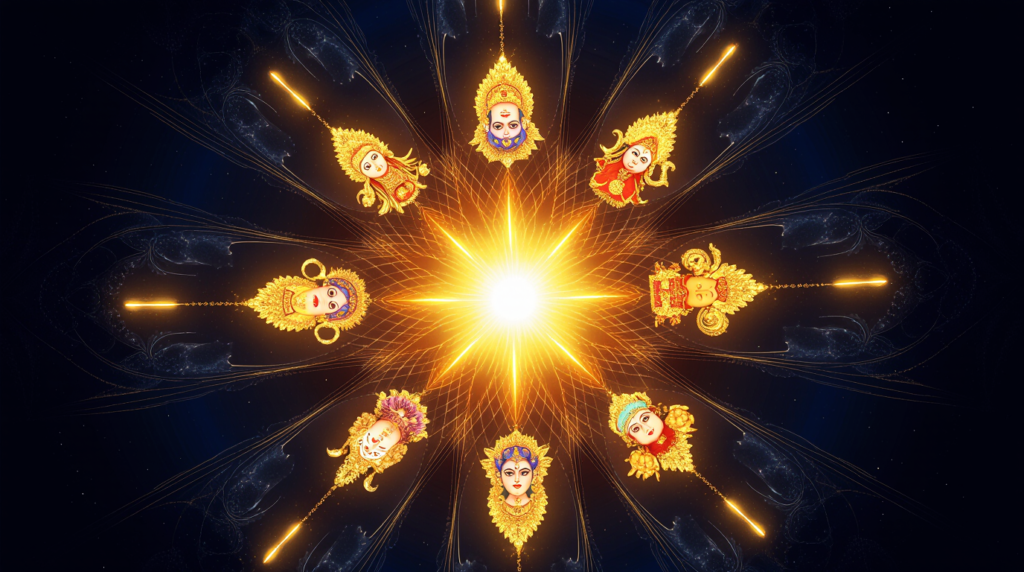
So why does Hinduism have so many gods? Because the tradition is built on a single radical idea: that the Divine is infinite, and infinite reality can take infinite forms. The gods are not rivals. They are different languages for the same truth, different doorways into the same temple, different faces of the same light.
Hinduism’s polytheism is not a primitive scramble of competing deities. It is a sophisticated recognition that human hearts are many, and a single form cannot hold them all. Whether you approach through Krishna’s love, Shiva’s fire, Durga’s protection, or the formless Brahman beyond all form, you are climbing the same mountain. The path differs. The destination is one.
Related Articles
Continue exploring our Hinduism FAQ series: