What is the Mahabharata? Summary, Characters, and Significance
The Mahabharata (महाभारतम्, Mahābhārata) is one of the two great Sanskrit epics of ancient India, the other being the Ramayana. At roughly 100,000 verses spread across 18 parvas (books), it is the longest epic poem ever composed. Compiled by the sage Vyasa, it tells the story of the Pandava-Kaurava cousin rivalry and the cataclysmic Kurukshetra war that changed the course of dharma itself. More than a story, the Mahabharata is a living encyclopedia of Hindu thought — encompassing philosophy, law, cosmology, and the eternal struggle between righteousness and desire. Its centerpiece, the Bhagavad Gita, is Hinduism’s most revered scripture, while its characters — Krishna, Arjuna, Bhishma, Draupadi, Karna — remain among the most complex and compelling figures in world literature.
What is the Mahabharata?
The word “Mahabharata” literally means “the great story of the Bharata dynasty.” It is classified as Itihasa (history-as-it-happened) — a genre that treats its events as both historical truth and spiritual teaching. Written in Sanskrit, it belongs to the Smriti literature (remembered/composed texts) alongside the Ramayana and Puranas, distinct from the Shruti (revealed) Vedas. The epic explores the central Hindu question: what should one do when duty demands something difficult? Its answer is not simple — it is forged in the crucible of war, family betrayal, and divine intervention at the most contested court in ancient India.
The Author and Composition Timeline
Traditionally, the Mahabharata is attributed to the sage Vyasa (also called Veda Vyasa), who is said to have dictated it to Ganesha, the scribe of the gods. Unlike the Ramayana’s relatively unified voice, the Mahabharata evolved over centuries, with layers added by multiple authors. Modern scholarship dates its core composition to roughly 400 BCE to 100 BCE, with later additions continuing into the early centuries of the Common Era.
The epic was composed in 18 parvas (books or sections), each representing a phase of the narrative. These parvas are: Adi (The Book of the Beginning), Sabha (The Book of the Assembly Hall), Aranyaka (The Book of the Forest), Virata (The Book of Virata), Udyoga (The Book of Effort), Bhishma (The Book of Bhishma), Drona (The Book of Drona), Karna (The Book of Karna), Shalya (The Book of Shalya), Sauptika (The Book of the Sleeping Warriors), Strishya (The Book of Carriages), Santi (The Book of Peace), Anushasana (The Book of Instructions), Asva (The Book of Horses), Asramayana (The Book of the Hermit), Mausala (The Book of the Jar), Mahaprasthanika (The Book of the Great Journey), and Svargarohana (The Book of the Ascent to Heaven).
The Story: A Summary of the Mahabharata
The Mahabharata centers on the conflict between two sets of cousins: the Pandavas and the Kauravas. The story unfolds in several key episodes:
- The Birth and Early Years: The story begins with the birth of the hundred Kauravas and the five Pandavas. The Pandavas — Yudhishthira, Bhima, Arjuna, Nakula, and Sahadeva — are the sons of Pandu, while the Kauravas are the sons of Pandu’s elder brother, the blind king Dhritarashtra.
- The Dice Game and Exile: In a court dominated by his uncle Shakuni, Yudhishthira loses his kingdom, wealth, brothers, and wife Draupadi in a rigged dice game. The Pandavas are forced into 13 years of exile, including 1 year in disguise.
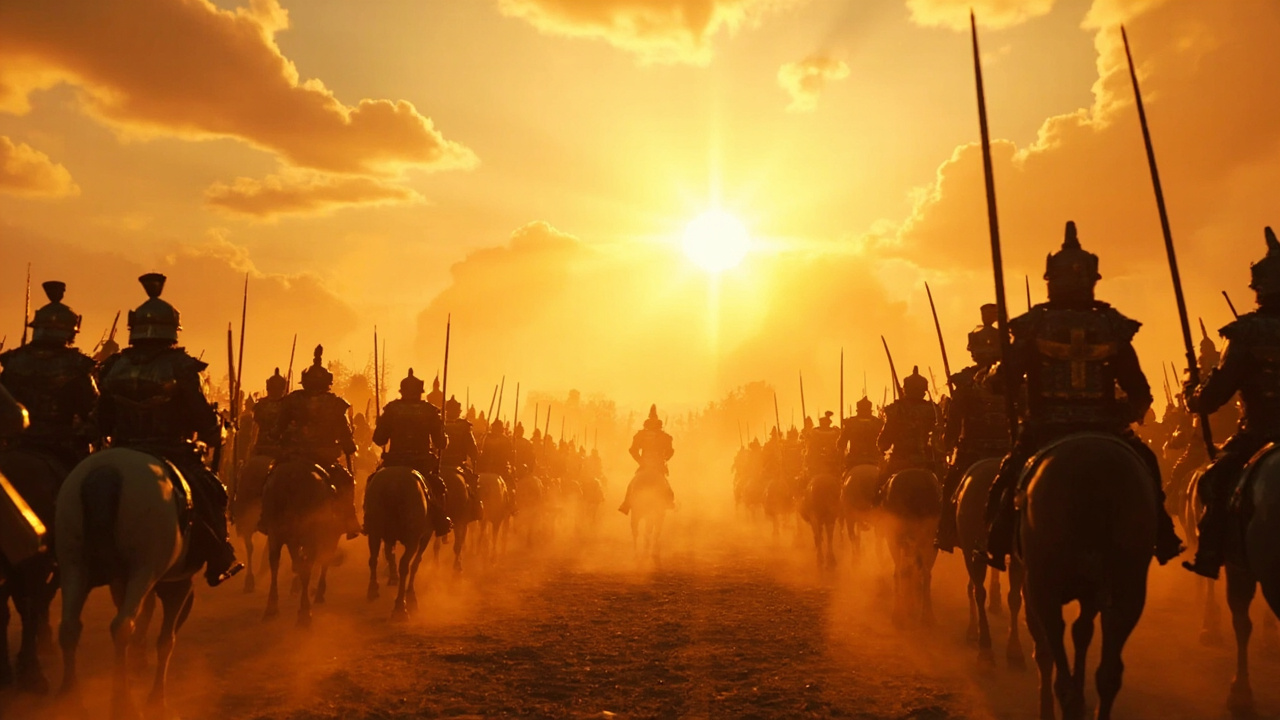
- The Kurukshetra War: The core of the epic is the great war between the two families, involving over four million warriors and lasting 18 days. In this war, heroes fall, dharma is questioned at every turn, and Krishna serves as Arjuna’s charioteer and spiritual guide.
- The Bhagavad Gita: Before the battle begins, Arjuna is filled with doubt about fighting his own kin. Krishna delivers the 700-verse Bhagavad Gita, teaching him about duty, devotion, and the eternal nature of the soul.
- The Aftermath and Final Years: After victory, the Pandavas rule for many years but eventually renounce the world, undertaking a final journey toward the Himalayas where they meet their destiny.
Main Characters of the Mahabharata
The Mahabharata presents some of the most complex and morally ambiguous characters in world literature:
- Yudhishthira (युधिष्ठिर): The eldest Pandava, epitome of truth and dharma, yet flawed by his weakness in the dice game. He struggles constantly between what is morally right and what is diplomatically necessary.
- Bhima (भीम): The mighty second Pandava, whose strength matches his appetite. He kills Dushasana in revenge for Draupadi’s humiliation and slays Duryodhana in single combat.
- Arjuna (अर्जुन): The mighty archer, hero of the epic, and recipient of the Gita’s teachings. He represents the seeker torn between action and renunciation.
- Nakula and Sahadeva: The twins representing the dual aspects of skill — horse-taming and informatics respectively — each embodying specialized knowledge as a form of dharma.
- Krishna (कृष्ण): The divine avatar whose role as strategist, charioteer, and philosopher makes him the epic’s central figure. He drives the narrative while remaining its most enigmatic presence.
- Draupadi (द्रौपदी): The fire-born daughter of King Drupada, wife to all five Pandavas. Her humiliation in the Kaurava court sparks the war that consumes both families.
- Duryodhana (दुर्योधन): The proud Kaurava prince whose envy of his cousins leads to destruction, yet who possesses genuine courage and loyalty to his kin.
- Karna (कर्ण): The tragic hero, born of Surya (sun god) but raised as a charioteer’s son. Loyal to Duryodhana despite knowing he is Pandava’s hidden brother, he embodies the struggle against fate.
- Bhishma (भीष्म): The grand-uncle who takes a lifelong vow of celibacy, fights for the Kauravas despite knowing their cause is flawed, representing the limits of personal dharma.
- Drona (द्रोण): The martial arts teacher whose loyalties are divided between his students, the Pandavas and Kauravas, on whose death depends the tide of war.
The Bhagavad Gita: The Heart of the Epic
The Bhagavad Gita (भगवद्गीता) forms chapters 23-40 of the Bhishma Parva. On the battlefield, Arjuna refuses to fight, seeing his gurus, cousins, and friends arrayed against him. Krishna reveals his universal form and delivers his teachings in three primary paths:
- Karma Yoga (कर्म योग): The path of selfless action, performing one’s duty without attachment to results.
- Bhakti Yoga (भक्ति योग): The path of loving devotion to God, surrendering all actions to the divine.
- Jnana Yoga (ज्ञान योग): The path of knowledge, discriminating between the real (Atman) and the unreal (body-mind complex).
The Gita’s famous declaration: “Abandon all dharmas and surrender to Me alone” (18.66) distills the epic’s message into a single command that has guided millions of seekers.
Major Themes of the Mahabharata
The Mahabharata grapples with fundamental questions of human existence:
- The Complexity of Dharma: Unlike the Ramayana’s clear moral compass, the Mahabharata asks: what when dharma conflicts with dharma? Krishna’s guidance reveals that sometimes one must act against conventional morality for a higher truth.
- The Consequences of Desire: The root cause of the war is Dhritarashtra’s blind love for his son, and Duryodhana’s envy. The epic shows how unchecked desire leads to universal destruction.
- The Impermanence of Power: Even the mighty fall. The Pandava victory brings not happiness but the burden of destruction. Yudhishthira’s final renunciation reflects this truth.
- The Divine in Human Affairs: Krishna’s presence throughout shows that God works through human agents, sometimes mystifying, sometimes guiding, but always teaching.
- The Dharma of War: When is war justified? The epic examines just cause, righteous anger, and the karmic consequences of violence.
The Mahabharata’s Influence on Hindu Life and Culture
The Mahabharata’s impact on Hindu civilization is immeasurable:
- The Bhagavad Gita: The Gita is recited daily in countless homes and temples. It is the foundation of Vedanta philosophy and the source of Hindu understanding of duty and devotion.
- Festivals: The Shrawan Parva commemorates the Pandava victory and Krishna’s departure. Prabodhini Ekadashi marks Krishna’s return from Netherworld. Gita Jayanti celebrates the Gita’s teaching day.
- Classical Dance and Music: The epic forms the central repertoire of Kathakali, Manipuri Ras Lila, and the Pandav Lila traditions. Draupadi’s swayamvara, Karna’s charity, and Abhimanyu’s death are perennial themes.
- Temple Architecture: Scenes from the Mahabharata dominate temple sculptures from Konark to Khajuraho, with Krishna’s universal form being among the most depicted.
- Daily Ethics: Concepts like Shiksha (instruction), Vinaya (discipline), and Satsang (holy company) derive from the epic’s teachings on right living.
The 18 Parvas in Detail
Each parva explores different aspects of dharma and human nature:
- Adi Parva: Origins, genealogies, founding narratives
- Sabha Parva: Court life, Maya’s palace, the dice game setup
- Aranyaka Parva: Forest exile, demonic encounters, spiritual discipline
- Virata Parva: Incognito exile, entry into King Virata’s court
- Udyoga Parva: Preparations for war, diplomatic efforts fail
- Bhishma Parva: The first ten days of war, Bhishma’s fall
- Drona Parva: Drona’s command, Abhimanyu’s death
- Karna Parva: Karna’s armor removed, his tragic death
- Shalya Parva: Final days of the war, Shalya’s command
- Sauptika Parva: Night attack, Ashwatthama’s massacre
- Strishya Parva: Chariot battles, remaining warriors fall
- Santi Parva: Harsh lessons on dharma, Bhishma’s teachings
- Anushasana Parva: Dharma instruction, Krishna’s final counsel
- Asva Parva: Horses, final preparations for departure
- Asramayana Parva: Life in the forest hermitage
- Mausala Parva: The destruction of the Yadavas in Prabhas
- Mahaprasthanika Parva: The final journey toward heaven
- Svargarohana Parva: The ascent, who reaches heaven and who falls
Regional Retellings Across India
Like the Ramayana, the Mahabharata inspired countless regional versions:
- Kashmir: The Kashmiri version by Kalyanakirti maintains unique philosophical interpretations.
- Tamil: Villidasan’s retelling emphasizes different character perspectives.
- Bengali: The Krittivasi version focuses on Karna’s righteousness.
- Marathi: The Mahabharata Rahasya explores hidden meanings.
- Odia: The Odia adaptation emphasizes local cultural elements while maintaining the core narrative.
Ramayana vs Mahabharata: Two Epics, Two Worldviews
The two great epics complement each other in Hindu thought:
- Ramayana: Idealistic, linear narrative. Rama = perfect dharma embodied. Clear moral choices. The story of how life should be lived.
- Mahabharata: Complex, multi-layered. Krishna = dharma teaching through paradox. Gray moral zones. The story of how life actually unfolds.
While the Ramayana asks “What is right action?” the Mahabharata asks “What when right action has no clear answer?” Both converge on the same goal: liberation (moksha) through dharma.
Frequently Asked Questions
Is the Mahabharata a true story or mythology?
The Mahabharata is classified as Itihasa — a genre that presents events as historical while acknowledging their spiritual significance. Traditional Hindus regard it as both history and scripture. Modern scholars estimate the core composition around 400-100 BCE, with layers added over centuries.
What is the Bhagavad Gita and why is it important?
The Bhagavad Gita is chapters 23-40 of the Mahabharata’s Bhishma Parva. It presents Krishna’s dialogue with the warrior Arjuna on the battlefield, teaching three paths to liberation: Karma Yoga (selfless action), Bhakti Yoga (devotion), and Jnana Yoga (knowledge). It is Hinduism’s most widely studied scripture.
Why did the Pandavas not refuse to fight in the war?
Arjuna initially refuses, but Krishna teaches him that inaction in the face of adharma is itself adharmic. A warrior’s duty (kshatriya dharma) includes fighting for righteousness. The war becomes not just about family rivalry but cosmic order restoration.
Who was Karna’s real father?
Karna was the son of Kunti and Surya (the sun god), conceived before her marriage through a sacred ritual. This makes him the older brother of the Pandavas, though raised unaware of his true parentage. His loyalty to Duryodhana despite this knowledge is one of the epic’s great tragedies.
What happened to the Kauravas after the war?
With Duryodhana’s death, the Kaurava line effectively ended. Only a few survivors remained — notably Yuyutswana, Dhritarashtra, and Gandhari, who eventually renounced the world. The Pandava victory brought not triumph but the burden of annihilation.
Is Krishna portrayed as a god or a human in the epic?
Krishna is both. He is an avatar of Vishnu (divine descent) but lives as a human prince of Dwarka, with human relationships, appetites, and strategies. This duality allows the epic to explore the presence of the divine in human affairs.
What is the message of the Mahabharata?
The epic teaches that dharma is complex and context-dependent. It warns against unchecked desire, shows the cost of pride, and ultimately points toward the need for divine surrender (bhakti) as the path through life’s inevitable moral ambiguities.
Related Articles
- What is the Ramayana? The Story, Characters, and Spiritual Significance
- What is the Bhagavad Gita? A Complete Guide
- The Main Scriptures of Hinduism: Vedas, Upanishads, Puranas, and Epics
- Dashavatara: The Ten Avatars of Vishnu Explained
- Understanding Moksha: Liberation and Spiritual Freedom
- What is Karma? The Law of Cause and Effect in Hinduism