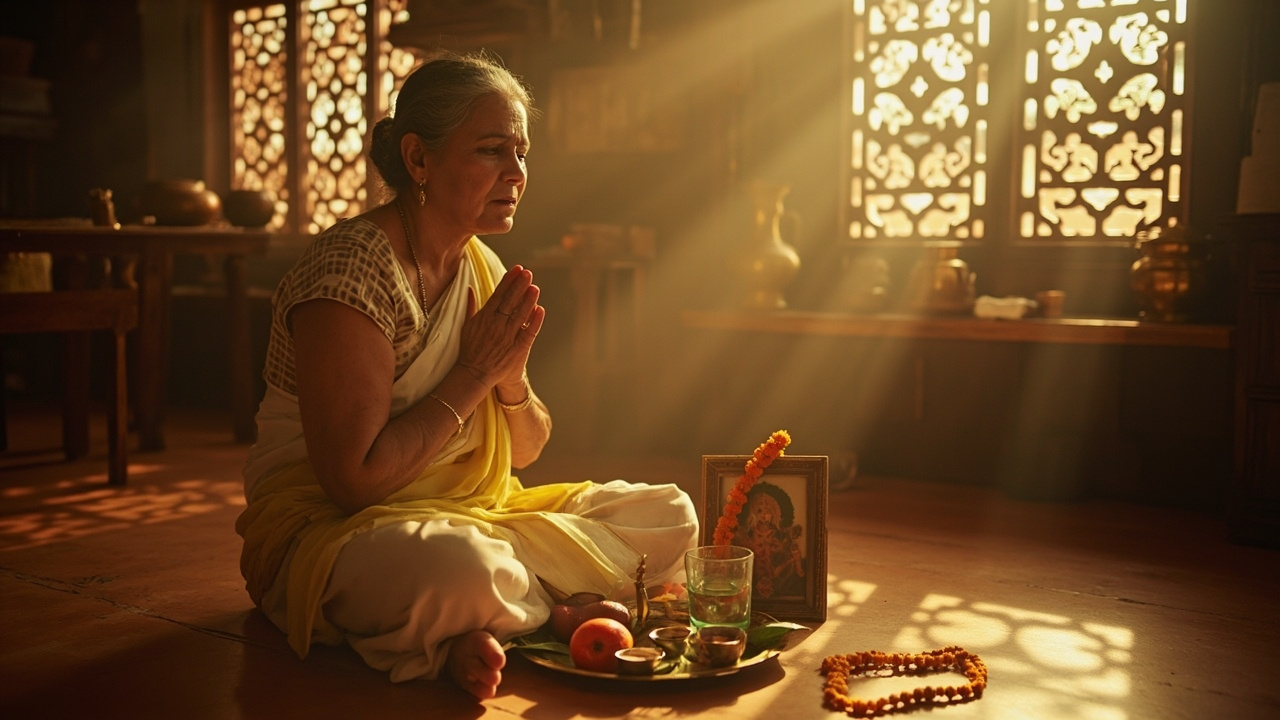
Why Do Hindus Fast? Meaning of Vrat, Ekadashi, Navratri & Other Hindu Fasts
If you have ever walked past a Hindu household on a Tuesday or a Wednesday and noticed the kitchen unusually quiet, you have probably wondered why. If you have ever joined a family dinner during Navratri and been offered kuttu ki puri and singhara halwa instead of the usual roti and dal, the same question comes up. Why do Hindus fast? The short answer is that fasting in Hinduism is not just about skipping meals. It is an act of mind, body, and spirit that has been practiced for thousands of years and is rooted in some of the oldest ideas of Sanatana Dharma. Whether the fast is called vrat (व्रत), upvas (उपवास), or upavaasa (उपवास) in Sanskrit, the intention is the same: to turn awareness inward, to purify, and to draw closer to the divine.
This article walks through the philosophy, the types, the most popular fasts in India, the rules, the benefits, and the practical how-to of Hindu fasting. Whether you are a beginner trying to understand what your grandmother means by Navratri vrat, or someone curious about Ekadashi, or simply looking for a clear answer to the question “why do Hindus fast,” this guide is for you.
What Is Fasting in Hinduism?
Fasting in Hinduism is a deliberate, conscious restriction of food, and sometimes water, for a fixed period of time, undertaken for spiritual, religious, or health reasons. The Sanskrit word upavaasa literally means “sitting near (the Lord),” which already gives away the heart of the practice. A fast is not punishment. It is proximity. The fasting person stays close to God, with the body lightened and the mind focused.
Hindu fasting differs from fasting in some other traditions in a few important ways:
Fasting is not always total abstinence
Many Hindu fasts allow certain foods. A person on Ekadashi may eat fruits, milk, and specific flours. A person on Navratri may eat kuttu (buckwheat), singhara (water chestnut), and specific vegetables. The fasting rules vary by region, deity, and tradition.
Fasting is tied to a deity, a tithi, or an occasion
Hindus do not fast randomly. They fast on Ekadashi (the 11th lunar day), on specific days of the week for a particular deity (Monday for Shiva, Tuesday for Hanuman, Saturday for Shani), during festivals (Navratri, Maha Shivaratri, Karva Chauth), or for personal vows (sankalpa) for the well-being of family.
Fasting includes the mind and the tongue
A true vrat in Hindu tradition includes manasik vrat (mental fasting), which means controlling anger, greed, lust, and speech. The external fast is supposed to support the inner fast, not replace it.
Why Do Hindus Fast? The Deeper Reasons
If you ask a scholar of Hinduism why fasting exists at all, you will usually hear four overlapping reasons. They are not contradictory. They sit together.
1. To purify the body and mind
The Garuda Purana and several Upanishadic texts describe the body as a temporary vehicle that needs regular cleansing. In Ayurveda, fasting is one of the primary ways to allow the digestive fire (agni) to rest and reset. Spiritually, Hindus believe that fasting burns away the impressions of past actions and clears the mind for prayer.
2. To develop self-discipline and willpower
The Bhagavad Gita (Chapter 6, Verse 17) describes the ideal person as one who is neither a glutton nor a total abstainer, but one who regulates diet and recreation. By choosing to say no to routine comforts, a fasting person trains the mind to follow the spirit rather than the senses.
3. To devote time and attention to God
Eating takes time. Shopping, cooking, and digesting meals fill a large portion of a normal day. When a Hindu sets aside one or two days for fasting, that time is freed for prayer, chanting, visiting temples, reading scripture, and family devotion. The fast is a way of saying, “God, I have given You my day.”
4. To fulfill a vow or seek a boon
Many Hindus fast with a specific sankalpa (resolve). A mother might fast on Mondays for her children’s well-being. A devotee of Hanuman might fast on Tuesdays to remove obstacles. A couple might fast together for a happy marriage. The fast becomes a way of dedicating one’s effort and discomfort to a divine cause.
Types of Hindu Fasting
Indian households follow several distinct types of fasting, and knowing the difference helps avoid confusion.
Nirjal vrat (waterless fast)
This is the strictest. The observer does not eat or drink anything from sunrise to sunset (or sunrise to next sunrise, depending on the occasion). It is commonly observed by women on Karva Chauth, by devotees on Maha Shivaratri, and by some people on certain Ekadashis. Nirjal vrat is considered the highest form of fasting because it tests both hunger and thirst.
Phalahar vrat (fruit-based fast)
Most common during Navratri. The observer eats fruits, milk, yogurt, kuttu (buckwheat) and singhara (water chestnut) flour, certain root vegetables, and specific spices like cumin and rock salt. Regular grains, lentils, onion, garlic, and non-veg food are avoided.
Ekadasi vrat (one meal, no grains)
On the 11th lunar day, devotees of Vishnu avoid grains and beans. Many take only one vegetarian meal, either in the morning or the evening, after which they break the fast the next day (Parana). The rule against grains on Ekadashi comes from the Padma Purana and is followed across South and North India, though the exact food rules differ.
Weekly deity fasts
Many Hindus observe a single-day fast each week dedicated to a specific deity. Common ones include Monday for Shiva (Somatvaar vrat), Tuesday for Hanuman (Mangalvaar vrat), Wednesday for Krishna (Budhvaar vrat), and Saturday for Shani Dev or Hanuman.
The Most Important Hindu Fasts You Should Know
India has hundreds of regional and seasonal fasts. A few stand out because of their pan-Indian reach and scriptural backing.
Ekadashi — the twice-monthly Vishnu fast
Ekadashi falls on the 11th day of each lunar fortnight, which means it comes twice every month. It is one of the most widely observed fasts in Hinduism, especially among Vaishnavas. The Padma Purana and the Vishnu Purana both glorify Ekadashi as a day equivalent to all other vrats combined. Common rules include avoiding rice, wheat, lentils, onion, garlic, and meat. Devotees read the Ekadashi Vrat Katha, visit Vishnu temples, and chant His names.
Navratri vrat — the nine-night Devi fast
Navratri happens twice a year, in spring (Chaitra) and autumn (Sharad). Devotees of Durga, Lakshmi, and Saraswati fast for nine nights. The fast is celebrated across India with regional variations:
North India (UP, Bihar, Rajasthan, MP)
People eat kuttu ki puri, singhare ki roti, sabudana khichdi, kheer, and fruits. Onion, garlic, regular salt (replaced with saindhav namak, rock salt), and grains are avoided.
Maharashtra
Families share faral — tapioca pearls (sabudana), potato dishes, and sweets like rajgira ladoo.
Gujarat
During Shardiya Navratri, even non-religious Gujaratis observe a strict nine-night fast with fasting foods like farali handvo and khichdi.
South India
Devotees prepare neivedyam (offerings) for Durga, including sundal (chickpea curry) each evening, while avoiding non-veg and alcohol.
Maha Shivaratri — the night-long Shiva fast
Maha Shivaratri falls on the 14th night of the dark fortnight in Phalguna (February-March). Many devotees observe a nirjal fast and spend the night in temples, chanting “Om Namah Shivaya.” The Shiva Purana describes this night as the most auspicious for liberation.
Karva Chauth — the married women’s fast for husband’s longevity
Celebrated mainly in North India, Karva Chauth is a nirjal fast from sunrise to moonrise. Married women dress in bridal finery, apply mehendi, and break their fast only after sighting the moon and offering water to their husbands. The practice is rooted in the story of Savitri and Satyavan from the Mahabharata.
Sankashti Chaturthi — the monthly Ganesha fast
Devotees of Ganesha observe a strict fast on the fourth day of the dark fortnight each month, breaking it only after sighting the moon. Modaks and other sweets are offered to Lord Ganesha.
Common Rules of Hindu Fasting
While the details vary by tradition, a few rules come up again and again.
What is generally avoided
- Regular grains (wheat, rice) and lentils during Navratri and Ekadashi
- Onion and garlic — considered tamasic (heavy, dulling)
- Non-vegetarian food, eggs, and alcohol across almost all fasts
- Leather items like belts and shoes during temple-related fasts
What is usually allowed
- Fruits, milk, yogurt, paneer, buttermilk
- Specific fasting flours: kuttu (buckwheat), singhara (water chestnut), rajgira (amaranth), samak (barnyard millet)
- Rock salt (saindhav namak) instead of regular sea salt
- Certain root vegetables like potato and sweet potato
Who is exempt
Children, pregnant women, the elderly, the sick, and anyone advised against fasting by a doctor are exempt from strict fasting. Sanatana Dharma places dharma of the body above ritual dharma. Even the Manusmriti notes that rules of fasting do not apply when the body is genuinely at risk, which is why elders always say “do not fast if you are unwell.”
Regional Variations of Hindu Fasting
India is not one homogeneous culture, and neither are its fasts.
North India vs South India
In the North, Navratri is associated with Durga and Devi worship, and the food rules emphasize kuttu and singhara. In the South, the same festival focuses more on Golu (doll displays) and Sundal (chickpea curry) offerings. Ekadashi in the South is often more strictly nirjal for Vaishnavites.
Bengal, Maharashtra, and Gujarat
Durga Puja in Bengal is more about celebration than strict fasting. Marathi Hindus are known for their elaborate fasting menus — sabudana vada, batata bhaji, and kuttu pakoras. In Gujarat, even non-religious households observe Navratri with farali thali menus planned in advance.
Spiritual Benefits of Fasting According to Hindu Scriptures
The benefits of fasting are not only physical. Hindu texts describe spiritual and mental benefits as well.
Detachment from the senses
The Bhagavad Gita (Chapter 2, Verse 64) warns that attachment to sense objects leads to anger, delusion, and ruin. By periodically choosing to step away from food and routine, a fasting person practices vairagya (detachment) in a small but real way.
Closer to the divine
The Garuda Purana says that a person who fasts on Ekadashi with devotion to Vishnu is freed from the sins of the previous birth. While the exact wording is symbolic, the message is consistent across scriptures: fasting accompanied by devotion moves the practitioner toward moksha.
Mental clarity
When the stomach is light, the mind settles. Many Hindus describe their fasting day as their most peaceful day of the month, because they spend it in prayer, family, and reflection. Ayurveda also recognizes fasting as a form of langhana (lightening therapy) that improves digestion and helps the body eliminate toxins — a view echoed by modern intermittent fasting research.
Common Misconceptions About Hindu Fasting
Because fasting is so deeply woven into Indian culture, several myths have grown around it.
Myth 1: Fasting means starving yourself
Not true. Most Hindu fasts allow specific foods, and the goal is moderation, not punishment. The word upavaasa itself means “to sit near the Lord,” not “to starve.”
Myth 2: Fasting is only for old women
Far from it. Men, women, and children all observe fasts. The Padma Purana recommends Ekadashi for everyone, including kings and householders. Many young Hindu professionals today keep weekly fasts as a way to stay rooted.
Myth 3: Fasting is outdated and unscientific
Modern research on intermittent fasting, autophagy, and digestive rest supports many of the health claims Hindu tradition has made for centuries. Ayurveda and modern gastroenterology agree that giving the gut a break is beneficial.
How to Observe Your First Hindu Fast
If you are new to fasting, here is a simple way to begin.
Pick a beginner-friendly fast
Start with Ekadashi or a Navratri weekday. Avoid nirjal fasts like Karva Chauth or Maha Shivaratri for your first attempt. Ask your family or local temple about the specific food rules.
Plan your food and your day
Shop for fruits, milk, yogurt, kuttu flour, singhara flour, and rock salt the day before so you do not break the fast from hunger. Wake up a little earlier, pray or chant, and read a small passage from the Bhagavad Gita or Durga Saptashati. When the fast ends, eat slowly, begin with fruit or yogurt, and reflect on the day.
Conclusion
So, why do Hindus fast? Hindus fast because the tradition sees the human body as a temporary home for the soul, food as one of the strongest attachments of the senses, and restraint as a doorway to the divine. Fasting is a small act with a long history. Whether you observe Ekadashi twice a month, fast during Navratri, keep a weekly vrat for a specific deity, or simply light a diya and skip dinner once in a while, the practice connects you to a chain of devotion that stretches back thousands of years.
If you take one thing from this article, let it be this: Hindu fasting is not about deprivation. It is about devotion, discipline, and clarity. Begin with a small step, follow your tradition’s rules, and let the experience speak for itself.
Frequently Asked Questions About Hindu Fasting
1. Why do Hindus fast on Ekadashi?
Ekadashi is the 11th lunar day, dedicated to Lord Vishnu. The Padma Purana and other Vaishnava texts say that fasting on this day washes away sins, helps the soul progress toward moksha, and brings blessings of health and prosperity. Most observers avoid grains and beans on this day and take only one simple meal.
2. Can I drink water while fasting?
It depends on the type of fast. On nirjal vrats like Karva Chauth and Maha Shivaratri, even water is avoided until the fast is broken. On fruit fasts like Navratri phalahar, water is allowed. On Ekadashi, water is allowed but rice and grains are avoided.
3. Why do Hindus not eat onion and garlic during fasts?
Onion and garlic are classified as tamasic foods in Ayurveda — meaning they are believed to dull the mind and inflame the passions. During fasting, the goal is clarity of mind, so these foods are avoided in favor of sattvic options like fruits, milk, and rock salt.
4. Is fasting compulsory in Hinduism?
No. Fasting is a recommendation and a personal choice, not a doctrinal obligation. Children, pregnant women, the elderly, the sick, and those advised against fasting by a doctor are exempt. The scriptures emphasize compassion over rigid rules.
5. Why do married women fast on Karva Chauth?
Karva Chauth is a nirjal fast observed by married Hindu women in North India for the long life and well-being of their husbands. It is based on the story of Savitri and Satyavan from the Mahabharata, where Savitri’s devotion saved her husband from death.
6. What is the difference between vrat and upvas?
Vrat is a broader term that covers all forms of religious observance, including fasting, prayer, and specific conduct. Upvas or upavaasa literally means “sitting near the Lord” and usually refers to fasting from food specifically. In practice, the two terms are often used interchangeably.
7. What happens if I accidentally break my fast?
Nothing dramatic. Hindu dharma places intention above perfection. If you unintentionally break your fast, you can either continue and observe an extra fast later or simply begin again the next year. The key is sincerity, not perfection.
Related Articles on Sattvic Gyaan
- Annaprasana: The Hindu First Rice Feeding Ceremony — Meaning, Vidhi & Significance
- Naamkaran: The Hindu Baby Naming Ceremony Explained
- Do Hindus Eat Meat? Understanding Hindu Dietary Practices & Vegetarianism
- Hindu Wedding Rituals Explained: Meaning Behind Every Ceremony
- Griha Pravesh: Hindu House Warming Ceremony & Significance
- Why Do We Ring Bells in Temples? Hindu Meaning of the Ghanta