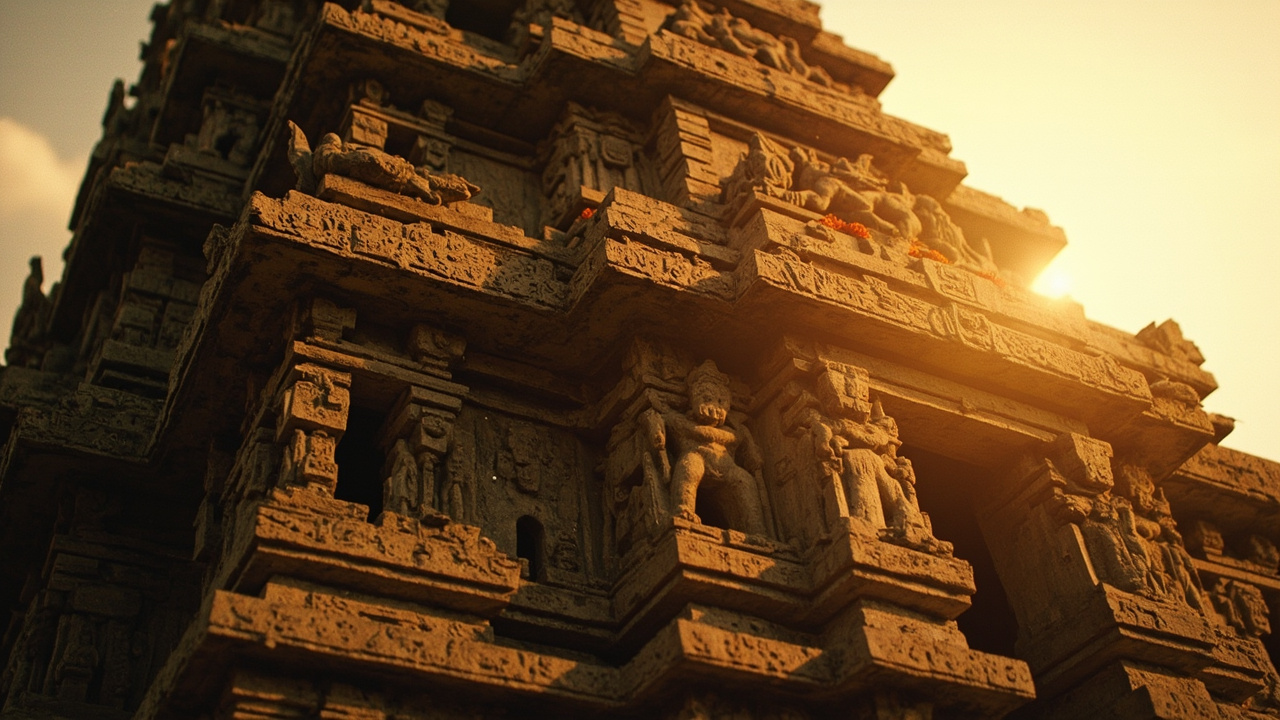
Dashavatara: The Ten Avatars of Vishnu Explained
Across India, on temple walls and in epic poetry, the same ten figures appear in a fixed sequence: a giant fish, a mountain-bearing tortoise, a boar lifting the earth from cosmic waters, a man-lion with claws unsheathed, a dwarf priest asking for three steps of land, a fierce warrior-sage with an axe, a prince with a bow, a flute-playing cowherd, a serene ascetic in robes, and a warrior on a pale horse. Together they form the Dashavatara — the ten principal incarnations (avatars) of Lord Vishnu, the Preserver in the Hindu Trinity. If you have ever wondered who these figures are, why Vishnu “descends” again and again, and what each incarnation teaches, this guide walks you through the order, the meaning, and the scriptural roots of one of Hinduism’s most enduring ideas.
The word Dashavatara comes from Sanskrit — dasha (दश) meaning ten, and avatara (अवतार) meaning “descent” or “one who descends.” It is the most widely recited list of Vishnu’s incarnations and has shaped South Indian temple architecture, Vaishnava theology, and Indian painting traditions for over a thousand years.
## What Is an Avatar in Hinduism?
Before looking at the ten, it helps to understand what an avatar actually is. In Hinduism, avatar is a deliberate descent of the Divine into a physical form to restore cosmic balance (dharma) whenever it falters. The Bhagavad Gita (Chapter 4, verses 7–8) states it directly: “Yada yada hi dharmasya glanir bhavati bharata, abhyutthanam adharmasya tadatmanam srijamy aham” — “Whenever dharma declines and adharma rises, I manifest Myself.” An avatar is not an illusion or a metaphor that some traditions treat it as — it is a real intervention, with divine consciousness fully present in a chosen form.
Three nuances matter. First, avatars are not limited to humans — they can be animal, half-animal, or cosmic forms. Second, most Hindu traditions hold that avatars are parts or portions (amsha) of the Divine, while the Divine itself remains whole and unmanifest. Third, the list of ten is the most well-known, but traditions often speak of additional incarnations: the Bhagavad Gita itself hints at this when it adds “paritranaya sadhunam vinasaya cha dushkritam” — to protect the righteous and destroy the wicked.
## Why Vishnu? The Preserver’s Role in the Trinity
The Hindu Trinity (Trimurti) assigns three cosmic functions: Brahma creates, Vishnu preserves, and Shiva dissolves to allow recreation. Preservation is not passive — it requires active, repeated intervention every time creation drifts toward chaos. That is why Vishnu’s avatars appear far more often than the incarnations of the other two deities. Where Brahma’s work begins and Shiva’s work ends cosmic cycles, Vishnu’s work sustains them.
Theologically, this means avatar is inseparable from the concept of dharma. Each avatar arrives to correct a specific imbalance — a demon king hijacking the Vedas, the earth sinking into cosmic waters, a pious Brahmin facing injustice, or the world sliding into moral decay at the close of an age. The avatar is the divine response to each of those crises. The philosophical depth of this idea is why so many seekers begin their study of Hindu philosophy with the Bhagavad Gita.
## The Dashavatara List — Ten Incarnations of Vishnu
Different Puranic traditions arrange the ten in slightly different orders, but the most widely cited sequence, especially in South Indian temple iconography, is:
- Matsya — the Fish
- Kurma — the Tortoise
- Varaha — the Boar
- Narasimha — the Man-Lion
- Vamana — the Dwarf
- Parashurama — Rama with the Axe
- Rama — Prince of Ayodhya
- Krishna — the Cowherd of Vrindavan
- Buddha — the Ascetic Teacher
- Kalki — the Warrior on Horseback
Together these ten trace a pattern many commentators have pointed out: the early avatars are cosmic or animal forms acting on the scale of the universe itself, the middle avatars move into human form to fix social and moral order, and the final avatar ends the cycle to begin a new one. The list, in other words, mirrors the unfolding of cosmic time.
## The First Three: Cosmic Rescues (Matsya, Kurma, Varaha)
Matsya, the fish, appears at the very beginning of the present cosmic cycle. When the four Vedas are stolen by a demon and the world itself threatens to dissolve into the primal waters, Vishnu becomes a small fish that grows to enormous size, carrying the sage Manu and the seeds of creation to safety on a boat. The avatar’s lesson is preservation of knowledge itself — without the Vedas and the wisdom of past sages, no civilization can survive.
Kurma, the tortoise, supports Mount Mandara on its back when the gods and demons churn the cosmic ocean to obtain the nectar of immortality. The churning sinks repeatedly; without Kurma’s steady foundation, the work cannot proceed. The avatar teaches the value of patience and the unseen, steady labor that holds a cosmic process together.
Varaha, the boar, dives to the bottom of the cosmic ocean to lift the earth — depicted as the goddess Bhudevi — out of the waters where a demon has dragged her down. The avatar is celebrated for the sheer, almost absurd, commitment to recovering something that has fallen. The lesson is that the Divine does not abandon even the most seemingly lost causes.
## The Pivotal Avatars (Narasimha and Vamana)
Narasimha, the man-lion, may be the most theologically interesting of the ten. He appears to protect his devotee Prahlada and to destroy the demon king Hiranyakashipu, who has reportedly obtained a boon making him nearly impossible to kill. To circumvent the boon’s narrow conditions, Vishnu takes a form that is neither fully human nor fully animal, neither inside nor outside, neither day nor night. The lesson is that divine justice finds a way even when the categories of ordinary logic appear closed.
Vamana, the dwarf, asks the proud king Bali for only three paces of land — measured as the dwarf’s steps. The first two steps cover the earth and the heavens; the third, the netherworld. Bali, bound by his own promise, is humbled. The avatar teaches humility, the danger of pride, and the unexpected smallness with which divine justice often appears.
## The Human Warriors (Parashurama, Rama, Krishna)
Parashurama, Rama with the axe, is a warrior-sage who appears when the Kshatriya class has become arrogant and is oppressing the rest of society. He is unique among avatars in being depicted as having ended his earthly role in violence. The avatar raises the question of whether, in extreme cases, force is necessary to restore dharma.
Rama, prince of Ayodhya, is the central figure of the Ramayana. His life, though he is heir to a throne, becomes a long series of trials: fourteen years of exile, the abduction of his wife Sita, and an epic war to recover her. The avatar is celebrated as the ideal son, king, husband, and friend — maryada purushottama, the perfect upholder of dharmic boundaries.
Krishna, the cowherd of Vrindavan and prince of the Yadava dynasty, is celebrated both as a playful child and flute-player and as the supreme philosopher delivering the Bhagavad Gita on the battlefield of Kurukshetra. If Rama is the avatar of righteous order, Krishna is the avatar of cosmic completeness — playful, tender, terrible, and transcendent in turn.
## The Final Two: Compassion and Closure (Buddha and Kalki)
Buddha appears in the list in a way unique to Vaishnava theology. Some Hindu traditions identify the historical Buddha as the ninth avatar of Vishnu, sent specifically to teach compassion and non-violence to a society in which Vedic animal sacrifice had become extreme. This identification is not the same as Buddhist teaching on the Buddha himself, but it explains why many traditional Hindu temples — including Vaishnava sites in South India — include Buddha imagery alongside other avatars.
Kalki, the final avatar, has not yet appeared in the current cosmic cycle. He is described as riding a white horse, sword in hand, arriving at the close of the present age — the Kali Yuga — to dissolve the world and begin a fresh creation. Kalki’s expected arrival gives the Dashavatara a built-in eschatology: the story is not yet finished.
## Where the Dashavatara Comes From
The list itself is not stated as a fixed ten in the Vedas or the Upanishads. Its earliest clear appearance is in the Vishnu Purana and the Garuda Purana, both dated to roughly the early centuries of the Common Era, and it crystallized later through the Bhagavata Purana (Srimad Bhagavatam), the Gita, and various sthala-puranas of regional temples. South Indian Vaishnavism, especially the Shri Vaishnava and Vadakalai traditions, developed the iconographic sequence most often seen on temple walls today. The Dashavatara thus belongs as much to temple art as to scripture — carved into gopurams in Tamil Nadu, painted onto Pahari miniatures, and recited in Sanskrit and Tamil devotional hymns.
## Common Misconceptions About Avatars
Three clarifications help avoid confusion. First, the list of ten is not exhaustive — traditions also include other incarnations (such as Dhanvantari, the divine physician, or Hayagriva, the horse-headed avatar of wisdom). Second, the forms of avatars are not strictly hierarchical — Vishnu is fully present in each, even the animals. Third, an avatar’s story is not merely mythology; in devotional practice it is treated as a true historical event with cosmic significance, and the lessons drawn from each are considered guidance for ordinary life. For seekers wondering why multiple divine forms exist at all, the related question of why deities appear in animal or unusual forms is addressed in Why Some Deities Have Blue Skin or Animal Features.
## Why the Dashavatara Endures
The Dashavatara remains a living part of Hindu practice because it does something specific: it places cosmic and human responsibility in a single, repeatable pattern. Dharma declines; the Divine intervenes. Whether that intervention looks like a fish, a boar, a man-lion, or a flute-playing prince, the message is consistent — protection, restoration, and renewal are always available. For devotees, the Dashavatara is also a meditation on form itself: the Divine is not bound to one shape or one age. Every icon and every temple wall that depicts the ten invites the viewer to see the same underlying consciousness moving across time.
## Frequently Asked Questions
### What is Dashavatara in simple words?
Dashavatara refers to the ten principal incarnations of Lord Vishnu, the Preserver in the Hindu Trinity. The list includes Matsya (fish), Kurma (tortoise), Varaha (boar), Narasimha (man-lion), Vamana (dwarf), Parashurama (Rama with axe), Rama, Krishna, Buddha, and Kalki.
### Why does Vishnu have multiple avatars?
According to the Bhagavad Gita, Vishnu descends whenever dharma declines and adharma rises. Each avatar restores cosmic order in a specific crisis — recovery of lost Vedas, protection of devotees, defeat of arrogant kings, or closure of the present age.
### Is Buddha really the ninth avatar of Vishnu?
Some Hindu traditions, particularly within Vaishnava theology, identify the Buddha as the ninth avatar — sent to teach non-violence when Vedic animal sacrifice had become extreme. This is a Hindu theological view; Buddhism itself regards the Buddha as the historical founder of its own tradition.
### What is the order of the Dashavatara?
The most widely accepted order is: Matsya, Kurma, Varaha, Narasimha, Vamana, Parashurama, Rama, Krishna, Buddha, and Kalki. Other Puranic texts list a few avatars slightly differently, but these ten are stable across most Vaishnava traditions.
### Is Dashavatara mentioned in the Vedas?
No. The Vedas themselves do not list ten avatars explicitly. The fixed Dashavatara sequence emerges in the Vishnu Purana, Garuda Purana, and later crystallizes in the Bhagavata Purana and South Indian Vaishnava iconography.
### Who is Kalki, the tenth avatar?
Kalki is described as the final avatar of the present age (Kali Yuga). He is yet to appear, riding a white horse with a blazing sword, and his arrival is expected to mark the end of the current cosmic cycle and the beginning of a new one.
### Why is Vishnu called the Preserver?
In the Hindu Trimurti, Brahma creates the universe, Vishnu preserves it, and Shiva eventually dissolves it. Preservation requires repeated intervention to restore balance, which is why Vishnu’s avatars appear more often than the incarnations of the other two deities.
## Related Articles on SattvicGyaan
- Why Do Some Deities Have Blue Skin or Animal Features? — symbols of divinity across avatars
- What is the Bhagavad Gita? — Krishna’s central teaching as an avatar
- What is Karma? — the law of action Vishnu’s avatars restore
- Understanding Moksha — liberation, the aim of every avatar’s mission
- Kumbh Mela — What & Why — cosmic time-cycle celebrated by Vishnu devotees
- What is Namaste? — Vaishnava greeting honoring the Divine in another